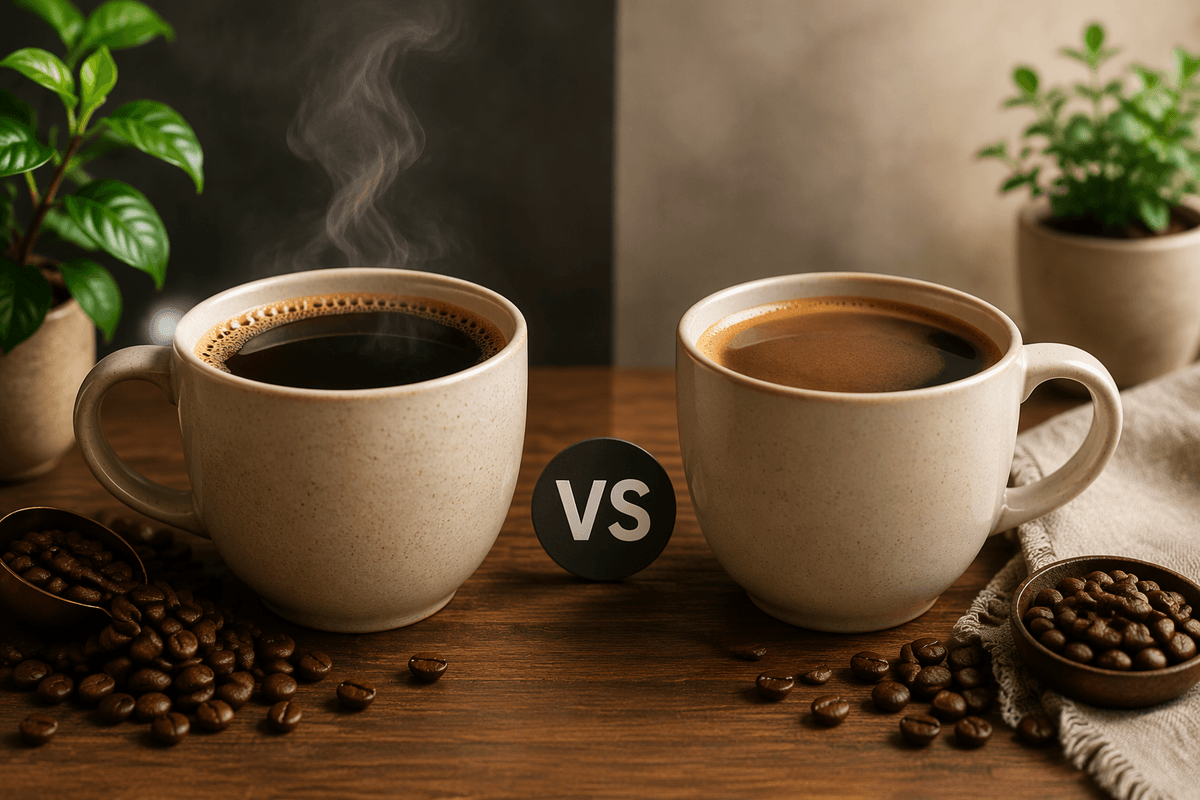
Caffeine isn’t the only thing that differs
The first thing you notice isn’t always “less buzz.” It’s that the cup can feel slightly different in your hands—aroma, bitterness, even how quickly you finish it—so your usual pace shifts without you meaning to. That matters because what you experience day to day isn’t just caffeine; it’s the whole routine: when you drink, how fast, whether you eat first, and whether that cup turns into two because the first one didn’t land the same.
In practice, regular and decaf can diverge in more than dose. Coffee carries other compounds that can feel “stimulating” in a fuzzier way, and the same person can react differently depending on stress, sleep debt, or an empty stomach. So if you switch and still feel a little keyed up—or oddly flat—it may be less about a clean on/off caffeine effect and more about timing, context, and how your body is reading the overall pattern.
The decaf isn’t zero-caffeine, and regular coffee isn’t a fixed number either. If your afternoon cup sometimes keeps you awake and sometimes doesn’t, that inconsistency can be a clue: your total load and timing are shifting, even when the mug looks the same.
How decaf is made changes what remains

You can taste it most when the coffee cools. A decaf that seemed “close enough” hot can turn a little thinner or sharper on the last few sips, and it’s easy to blame the missing caffeine. But a lot of that difference comes from how the caffeine was removed, because the process can also nudge which flavor and aroma compounds stay behind—and which don’t.
Some decaf methods lean on solvents (often used indirectly by treating the beans or the water), while others rely more on water-based extraction or supercritical CO₂. The goal is similar—pull out most caffeine—yet the side effect is that different compounds get carried along to different degrees. That means two decafs can behave differently in your day even if they’re both labeled “decaf”: one might feel smoother but slightly muted, another might taste brighter but leave you oddly unsatisfied.
That “not quite landing” feeling can create a practical mismatch: you sip faster, pour a second cup, or add an extra shot without thinking. The label didn’t change, but your total intake and timing might—and that’s often where the real difference shows up.
Caffeine amounts overlap more than people expect
It’s easy to assume “regular = a lot” and “decaf = basically none” until you notice how uneven the same order can feel. One day a small mug seems to do the job; another day the same size leaves you reaching for a refill—and suddenly the difference between regular and decaf isn’t as clean as you expected.
That’s partly because caffeine in coffee isn’t a fixed label, it’s a moving target. Bean type, brew method, dose, and cup size can push a “regular” cup into a lower range, while some decafs still carry a noticeable leftover amount. The overlap isn’t usually one-to-one, but it can show up in real life when the “regular” you’re drinking is on the mild side, and the “decaf” is on the higher side.
What you feel tends to track the total load and timing: needing more cups to feel alert, feeling oddly wired later, or getting a dull withdrawal-style headache when you cut back faster than you realized.
Taste and texture differences show up in daily use
The difference sometimes shows up as a small letdown in the middle of the cup. The first sip smells right, but the body can feel a touch lighter, the bitterness can land a little differently, and you might find yourself fiddling—an extra splash of milk, a pinch more sugar, a slightly finer grind next time—just to get the same “finished” feel.
That matters because your palate quietly shapes your dosing. When a coffee feels thinner or less rounded, people often drink it faster, reheat it, or top off sooner, which compresses the timing of whatever caffeine remains. In other cases, the opposite happens: you sip longer because it’s less punchy, and your intake stretches later into the day than you planned.
It’s also why decaf can feel inconsistent even with the same bag. Small changes in freshness, roast, and extraction show up more when the cup is subtler, so the routine becomes the variable. The coffee didn’t “fail,” but your usual signals—satisfied, done, alert—may take longer to arrive.
Body reactions aren’t driven by caffeine alone
Sometimes the tell isn’t your mind—it’s your stomach. You finish what should be an easy cup and notice a faint fluttery warmth, a little throat burn, or that “too empty” feeling that makes you snack earlier than usual. It’s tempting to credit (or blame) caffeine, but the same reaction can show up with decaf, just in a slightly different shape.
Coffee still brings acids, oils, and other compounds that can nudge digestion and stress signals, especially on an empty stomach or during a tense morning. That can feel like stimulation even when the caffeine dose is lower: quicker heart awareness, a subtle hand restlessness, or a sudden urge to move. Add in the practical variables—milk vs black, sugar, how fast you drink, whether you’re dehydrated—and the body’s response can swing day to day without a clean “regular vs decaf” explanation.
Your brain may expect the usual lift, so you scan for it—and when it doesn’t arrive, you pour more. In real life, that’s how non-caffeine effects and caffeine timing can get tangled, even when you’re trying to simplify the pattern.
Sleep, anxiety, and focus respond in uneven ways

It often shows up at night as a quiet mismatch: you feel physically tired, but your mind keeps checking in. You’re not exactly “wired,” yet it’s harder to drop into sleep, and the next morning your focus feels thin—like you’re awake but not fully online. That’s where people get confused, because the same coffee routine can produce opposite outcomes depending on timing and how quickly your body clears what you drank.
Sleep pressure builds all day, but caffeine can blunt the feeling that you’re ready to shut down, even when you’ve been running on fumes. Decaf may soften that, but not always immediately, because leftover caffeine can stack with earlier cups, and your total dose might not fall as much as you think if you compensate with refills. Anxiety can follow a similar “uneven” curve: sometimes it’s obvious jitters, other times it’s just a faster internal tempo that makes small tasks feel urgent.
If you’re used to a sharper lift, a lower dose can feel like distraction—so you drink again, later, and the trade-off shifts from daytime alertness to nighttime restlessness. The pattern isn’t always dramatic, but it repeats often enough to notice once you start watching the timing.
Switching to decaf can create unexpected discomfort
The first couple of decaf days can feel strangely “off” in your head, not because anything dramatic happens, but because the lift you’re used to is missing its usual edges. You may notice a dull morning pressure, a heavier blink rate, or a dip in mood that shows up right when you’d normally hit your second cup. It’s easy to misread that as the decaf “not working,” when it can simply be a faster drop in your total caffeine load than you intended.
If your regular coffee was effectively propping up a steady baseline, even a partial reduction can reveal a rebound pattern: sleepiness that arrives earlier, a slightly irritable focus, or a low-grade headache that fades after lunch. And because decaf still contains some caffeine, the timing can get confusing—enough leftover to delay a crash, but not enough to produce the familiar steadiness.
For some people the fix isn’t more cups, but noticing what changed around the cup: speed of drinking, later refills, or a more empty-stomach routine. When those shifts stack, the switch to decaf can feel like a step backward before it feels like relief.