Mongolia isn’t hard to reach—it’s hard to pace
I stood at the arrivals curb in Ulaanbaatar with a printed map folded into quarters, tracing a neat loop I’d drawn to “see it all” in ten days. The driver glanced at my pencil line, then at his dashboard clock, and asked—politely—what time I needed to be back in the city. That tiny question, asked beside a dented van and a trunk full of jerry cans, was the first hint that Mongolia doesn’t resist you at the border; it resists your calendar.
On paper, distances look like a normal road trip; on the ground, they behave more like weather—something you work around. A “six-hour drive” can be five if the track is firm, or eight if it’s rutted and everyone slows to spare the suspension, and that trade-off is constant: speed versus not arriving shaken and headachey. This pacing hits solo travelers hardest because you’re often fitting your tour days between fixed flight nights, while guides prioritize safe daylight driving over your ideal sunset viewpoint.
If you like structure, build buffers: one loose day in Ulaanbaatar (ATMs, SIM, snacks) and at least one “nothing day” in the countryside where the only plan is to arrive before dark. It’s less efficient than cramming in landmarks, but it works better for anyone nervous about long drives, basic toilets, or the feeling of being far from services. When your tour says “flexible,” read it as permission to slow down rather than a promise you’ll still tick every box.
Distances that rewrite your schedule
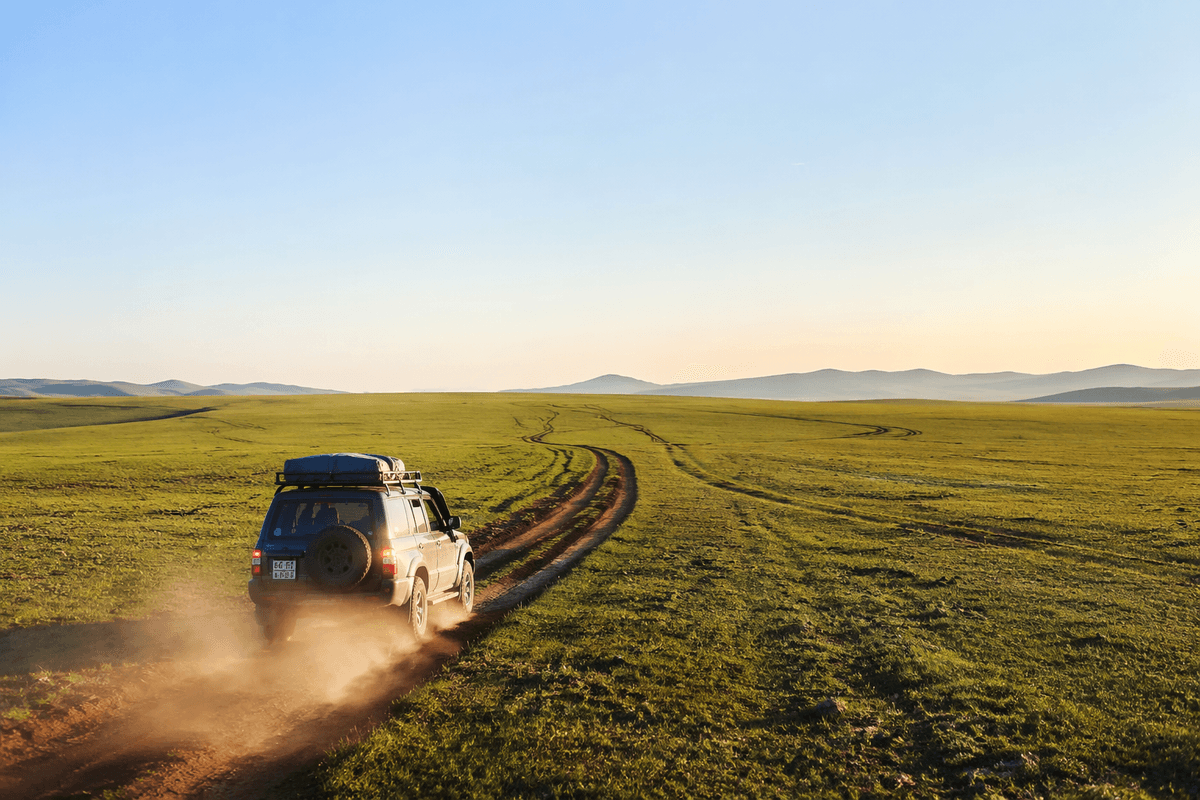
At 7:10 a.m., we left a small town with two full thermoses and a plastic bag of buuz, and by noon the “road” had quietly turned into braided tire tracks across grass. My phone showed a straight blue line to the next camp, but the driver kept angling toward firmer ground, skirting a shallow stream and a patch of mud that looked harmless until the wheels sank. The map was confident; the land was not.
This is where Mongolia rewrites your schedule: distance isn’t just kilometers, it’s surface, daylight, and how often you need to stop. Compared to a paved-country road trip, you don’t get reliable “ETA math”—you get bursts of speed, then long stretches of careful crawling to save tires and backs. It works well if you’re here for horizon and quiet, less well if you’re chasing a tight list of monasteries and viewpoints, because every detour (a washed track, a herd blocking the line, a surprise construction zone) steals from your evening.
Plan your days like you’re budgeting batteries: assume patchy signal, few shops, and toilets that are more “windy shed” than facility. Cash matters more once you leave bigger towns, and food gets repetitive unless you carry backups—nuts, instant noodles, electrolyte packets—because the “next stop” isn’t always open when you arrive. If your tour offers a longer drive to squeeze in one extra region, ask what time you’ll actually reach the ger camp; arriving after dark is doable, just not restful.
Gers, tea, and radical hospitality
I hesitated at the low wooden door of the first ger, boots half-on and hands full of camera straps, while a kettle hissed on the stove. A child tugged the felt flap wider, and someone pressed a bowl of salty milk tea into my palms before I’d even found where to sit. Outside, the wind slapped the canvas; inside, it was warm enough that my glasses fogged.
Ger-camp stays and family gers can look similar in photos, but the trade-off shows up fast: camps run more predictable (set meal times, sometimes a shower), while family stays feel personal and fluid, with fewer “services” and more moments you can’t schedule. If you’re mid-budget and solo, it works best when you’re okay being a little awkward—waiting while chores happen, eating what’s offered, learning the rhythm. It’s less ideal if you need strong privacy or you’re counting on Wi‑Fi to plan the next day.
Etiquette is mostly simple, but timing matters. Accept the first tea or snack even if you’re not hungry; refusing can read like you’re rushing the interaction, and rushing is the one thing Mongolia will punish. Expect repetitive meals (mutton, noodles, bread) and plan a small backup stash for nights when you arrive late and dinner is already gone. Connectivity is the quiet limiter: you may have enough signal to send a message from a hill, not enough to “research options,” so decide earlier what comforts you’ll pay for—extra water, a private toilet hut, or just more time with the stove and the stories.
Weather flips fast, gear matters
One afternoon near Kharkhorin, the sky went from pale blue to slate in the time it took me to lace my boots, and a gust slammed grit into my teeth. Ten minutes later we were driving through sideways rain with the heater blasting, then stopping again because the clouds broke and everyone wanted photos. I’d packed for “summer,” but Mongolia was doing four seasons as a demo.
The real friction isn’t just cold or heat—it’s how fast conditions change compared to places where you can trust a forecast and a paved pull-off. Wind turns a mild 60°F into something you feel in your bones, and sudden showers make dirt tracks slick enough that your guide may reroute or slow down, trading a sunset stop for arriving upright. This works for travelers who like a little improvisation; if you need precise timing for hikes or drone shots, you’ll be negotiating with weather more than with distance.
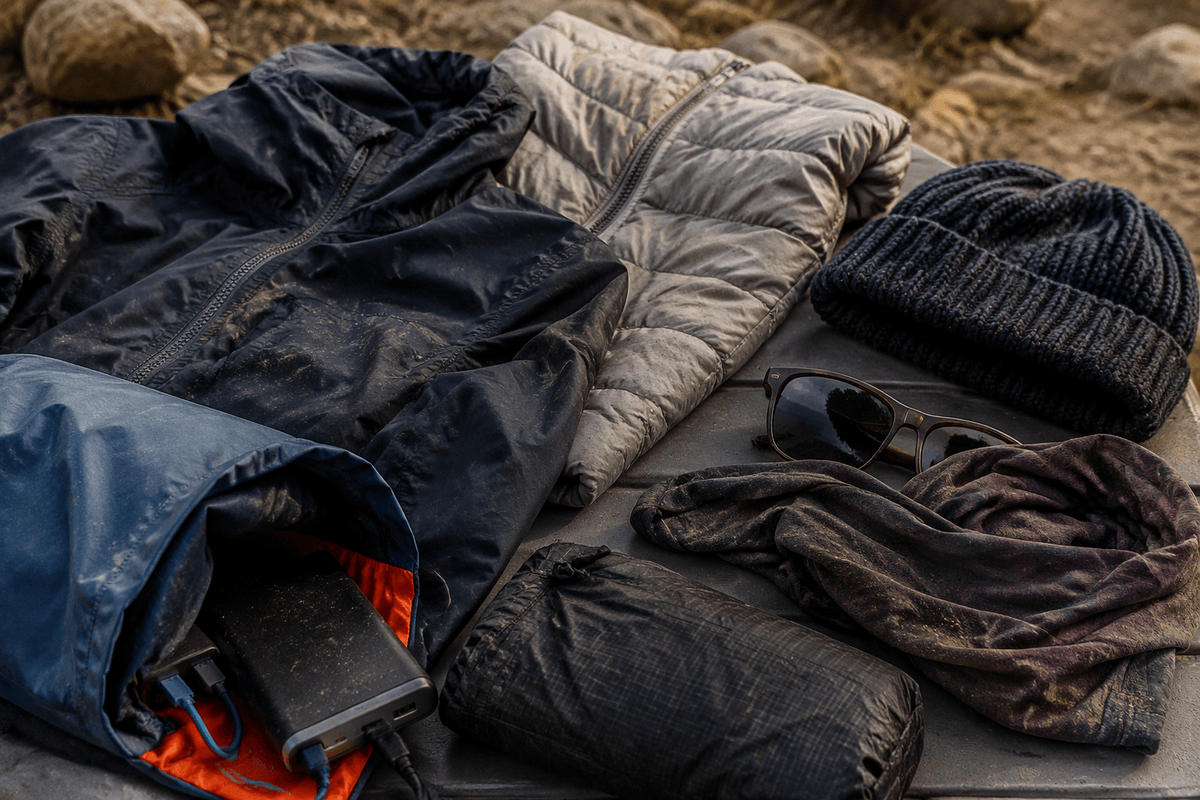
Gear is your schedule insurance. A light down or synthetic layer, a windproof shell, and a warm hat beat bulky “one big jacket,” because you’ll be adding and stripping layers at every stop, often outside with no shelter. Bring sunglasses and a buff for dust, plus a dry bag for electronics—phone signal is already patchy, and a soaked power bank is a silly way to lose navigation. If your tour lists “optional” rain gear, treat that as “you’ll wish you had it.”
Animals, silence, and wide-open rules
At dusk, our driver braked for what looked like a moving shadow, and a whole line of goats unspooled across the track like spilled beads. No one honked; we just waited with the engine idling, listening to bells and the soft thud of hooves on dry ground. I’d expected “wildlife spotting” to feel like a park experience, but here the animals were simply traffic—unbothered, uncaptioned, and in charge of the pace.
The wide-open part is real, but it comes with rules that aren’t posted. You don’t wander through a herd for a photo because it scatters animals and burns someone’s workday; you also don’t assume a straight line is “public access” when there’s a ger nearby and dogs are doing their job. Compared to places with fences and marked trails, Mongolia is freer and more delicate at the same time: your tour can stop almost anywhere, yet a casual detour can turn into an awkward standoff with barking guardians or a slow, muddy backtrack.
Silence is the daily feature—and the trade-off. It’s restorative if you’re good with long stretches of nothing (and patchy signal), less so if you need cafés, playlists, and constant landmarks to feel oriented. If you’re choosing between a faster route and fewer drive days, ask yourself whether you’re coming for “sights” or for that unedited quiet you only notice when you finally stop talking.
What I’d plan for 10 days
At 6:45 a.m., I stood in a Ulaanbaatar hostel hallway refreshing my bank app while my guide texted, “Leaving at 8,” and the ATM downstairs was out of cash. My backpack was half-zipped, my SIM was working only on one bar, and I had that split-second question: do I chase comfort or mileage? The clock picked for me.
If I had ten days again, I’d keep Day 1 in UB as a pure setup day (cash, SIM, snacks, wet wipes), then commit to one main region instead of a heroic loop. The trade-off is simple: Gobi-style big skies and long, flat drives versus greener north/central routes with slightly shorter hops but more weather mood swings. I’d ask any tour to cap “driving days” at 5–6 hours on paper, because Mongolia’s paper-hours inflate.
My mid-budget sweet spot: 1 night UB at the start, 6–7 nights in the countryside with one planned “arrive-before-dark” day, then 1 night back in UB before flying. I’d pay extra for a tour that carries real drinking water and has a consistent toilet plan (even if it’s a private pit stop tent), and I’d stop pretending I’ll be online every night. If your gut wants fewer regions and more stops, listen to it—Mongolia rewards the route you don’t have to sprint through.