It’s not about coffee, it’s about the view
I paused at the last set of stairs by the Teatro da Garagem door, checking my phone at 6:42 p.m. like it could tell me whether the climb had been worth it. The espresso smell was there, sure, but the real pull was the sudden drop of Lisbon’s roofs below you. Even before you sit, you can tell this isn’t the kind of place you choose for latte art.
The view does the heavy lifting: layered terracotta buildings, the castle ridge in the near distance, and that feeling of being above the street noise without leaving the city. Compared with the big-name miradouros, it’s less “photo line and tripod shuffle” and more “find a chair and exhale”—though it can still bottleneck if a group arrives and claims the rail seats. The trade-off is obvious: you’re paying café prices for a balcony rental, not chasing the best pastries in town.
If you’re the kind of couple that likes one drink stretched into forty minutes, Café da Garagem works; if you want fast service and precision coffee, it can feel sluggish when it’s busy. The uphill approach is the quiet tax you pay, and it hits harder after a full day in Alfama. Aim for late afternoon before sunset pressure builds, or come after dinner when the viewpoint crowds thin and the city lights do the flirting for you.
Why this spot feels uniquely Lisbon
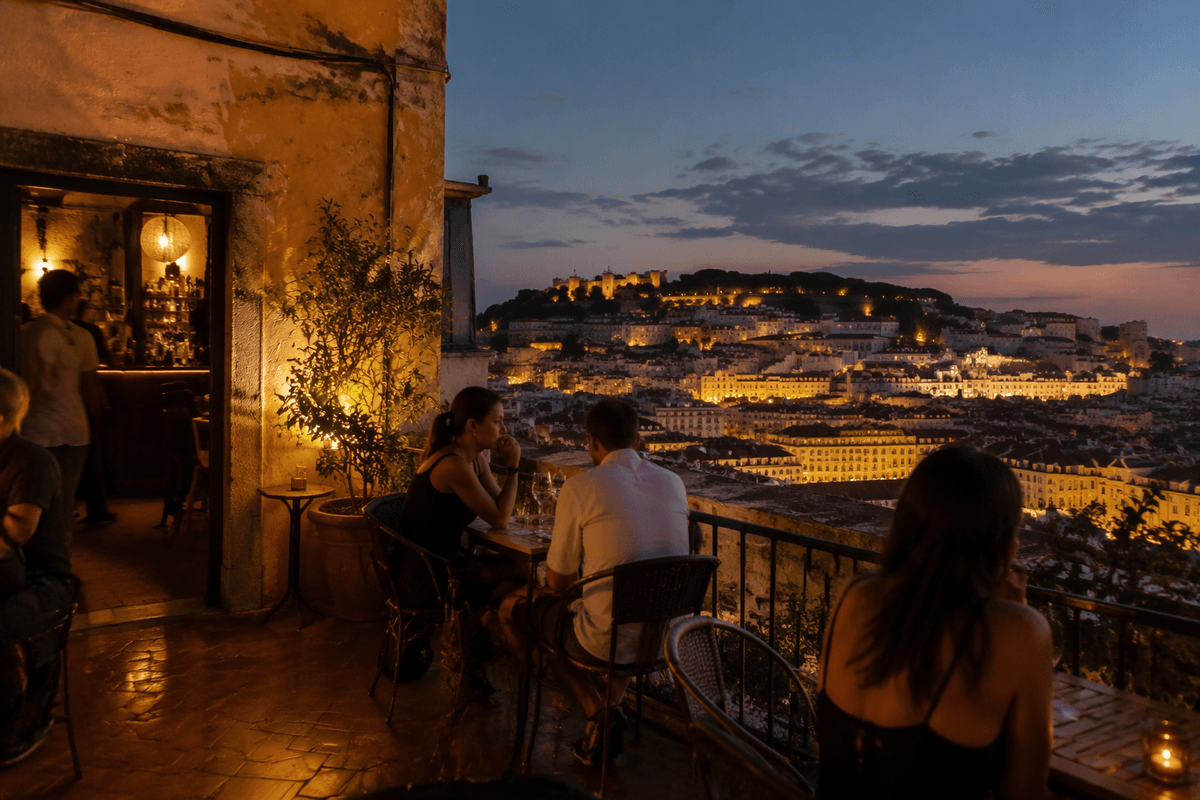
At 7:11 p.m., I hovered in the doorway while a couple squeezed past with two glasses balanced like a small engineering project. Inside felt like a backstage room—dim, a little scuffed, voices bouncing off walls—then the terrace hit like a curtain lift. The contrast is very Lisbon: rough edges, good angles, and the sense you’ve wandered into somewhere that isn’t trying to be polished for you.
Big miradouros like Portas do Sol can feel like a conveyor belt at golden hour, and Senhora do Monte asks for more stamina than you think you have on day two. Here, you’re not standing shoulder-to-shoulder at a railing; you’re sitting with a drink, watching the city do its slow shift from warm stone to streetlights. It works best for couples who like lingering and people-watching; if you’re chasing a “quick stop,” the service pace can turn that plan into a longer, pricier pause than intended.
The vibe lands somewhere between neighborhood café and accidental theater bar, which is fitting given the building. Prices track with “view tax” spots rather than local tasca bargains, so ordering simply helps: one drink each, maybe a shared snack, and you’re buying time more than food. If the terrace tables are full, decide fast—either wait it out for the seats, or bail and keep your legs for the next uphill.
The terrace view that seals it
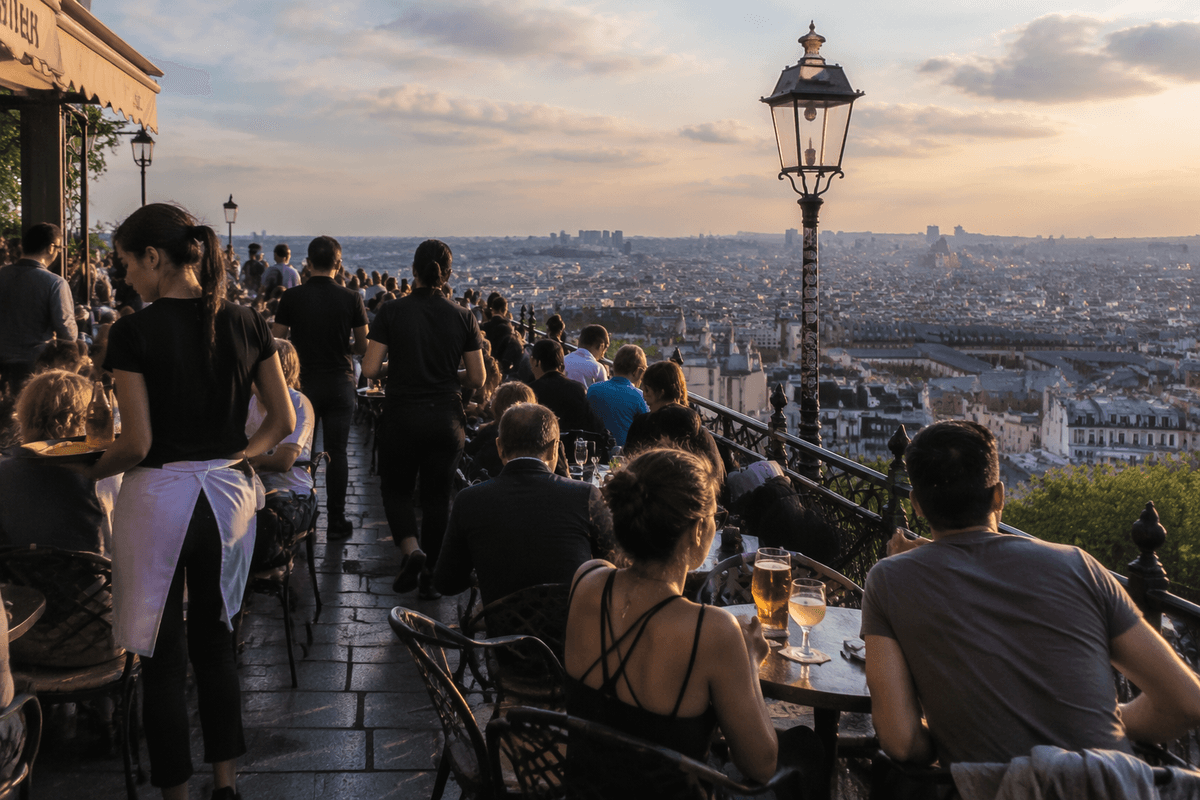
At 7:28 p.m., I took the first empty chair that wasn’t already angled toward the edge, and the whole terrace did that quiet swivel—everyone’s body turning a few degrees toward the skyline. The table wobbled on one uneven foot, and I didn’t fix it because the view was already stealing my attention. It’s not the wide, river-dominant sweep you get from Miradouro da Graça; it’s more layered and intimate, like you’re peeking over shoulders into a lived-in city.
From here, the Castelo de São Jorge ridge sits close enough to feel textured, and the roofs tumble away in messy tiers that look better in motion than in a single photo. That’s the trade-off: fewer “wow, the whole Tagus!” moments, more slow details—laundry lines, courtyards, light shifting on pale stone. If you’re a couple that likes pointing out small things and lingering, it lands; if you want one dramatic panorama and done, you may feel underwhelmed.
Timing changes the terrace more than the menu does. Just before sunset, the best rail seats become a soft competition, and a warm evening can turn the space into a slow-moving queue for chairs rather than drinks. Later, when the air cools and the city lights click on, it feels calmer—less tripod energy, more murmured conversations. If your legs are already cooked from Alfama, this is the moment to decide: stay for one simple round and let the view do the work, or save the climb for a bigger miradouro elsewhere.
What to order and what to skip
I got to the counter with that small panic you feel when the line has formed behind you and the chalkboard reads like a dare. Two people ahead of me were debating cocktails while the terrace seats were turning over in real time. With the “view tax” already baked in, I didn’t want to spend it on something forgettable.
For most mid-budget couples, the safest play is simple: a glass of vinho verde or a sangria if you want something easy, plus a beer if you’re treating this as a miradouro-with-service rather than a destination bar. Coffee works when you’re here early or you genuinely want a warm drink to stretch the stop, but it’s rarely the reason you’ll remember the place. If you want to linger through the light shift, one drink each buys you the time without turning it into a full bill.
Food is where expectations get expensive. Think “snack to justify the table,” not “late-afternoon meal,” especially if the terrace is busy and service slows. I’d skip anything you’re ordering out of hunger desperation—your patience will run out before the plate arrives. If you want something hearty, save it for a nearby tasca after, and let this spot stay what it’s best at: a drink, a chair, and a city that keeps moving even when you don’t.
How to time it and avoid friction
At 7:53 p.m., I watched the terrace clock do that quiet bully move—sun lowering, seats not turning over fast enough, and a couple beside me doing mental math on “one drink” versus “missing dinner.” A small cluster hovered near the rail tables like they were waiting for a bus. If you’re arriving in that 30–45 minute window before sunset, assume you’re negotiating for chairs, not just ordering.
The low-friction slot is earlier than your instincts: late afternoon, when the light is still good but the miradouro crowd hasn’t fully migrated uphill. Compared with Portas do Sol, it’s less of a constant conveyor belt, but the terrace is smaller, so one tour group can change the whole mood. If your plan is “quick stop,” set a timer—30 minutes keeps it pleasant and prevents the slow service pace from quietly turning this into your main event.
Route-wise, it works best stitched into Castelo/Alfama wandering, not as a standalone detour when your legs are already fried. After rain or on a windy evening, the trade-off flips: you’ll get emptier tables, but you may not want to linger. If the terrace is full, don’t queue on principle—walk two minutes, reset, and decide whether the view is worth waiting for a chair you can’t fully enjoy.
If you only have one evening
At 8:19 p.m., with my phone at 12% and dinner reservations drifting from “soon” to “now,” I stalled at the corner by the castle walls and looked uphill one more time. The air had cooled just enough to make the climb feel negotiable, but not enough to hide the fact that it’s still a climb. This is the moment where “quick drink with a view” either happens cleanly, or turns into a small time leak.
If you only have one evening in Lisbon, Café da Garagem works best as your soft landing after Castelo/Alfama—closer and calmer than the Portas do Sol circus, less of a full-on hike than Senhora do Monte. The terrace is small and the service pace can be unhurried, so it rewards couples who are happy to sit and watch the light change, not those trying to squeeze in three stops before dinner. Prices won’t feel like a bargain, but they’re predictable “view tax,” and one drink each keeps it from escalating.
Make it a 35–50 minute stop: arrive either before the sunset rush or after the sky has already started dimming, when rail seats loosen and the mood turns quieter. If you walk up and there’s nowhere to sit, don’t hover—take that as your cue to pivot to a bigger miradouro and spend the evening on streets instead of waiting for chairs.