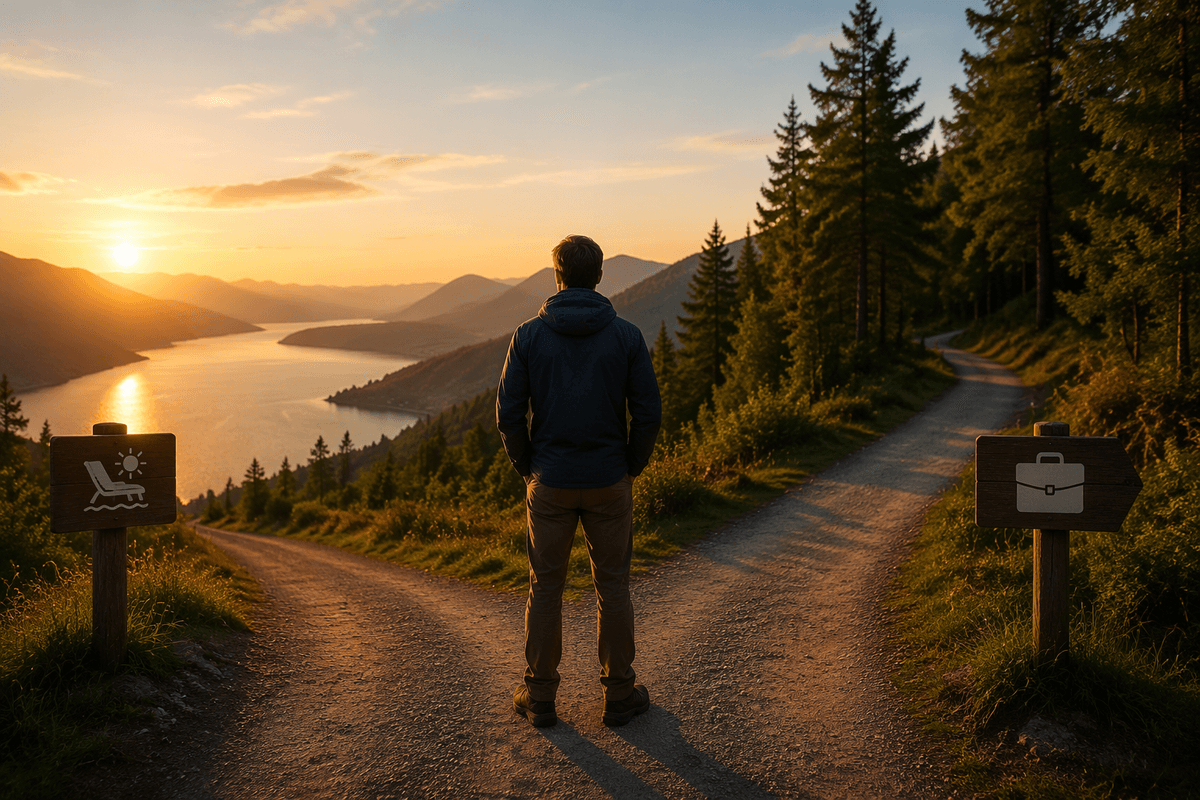
The real choice is views or logistics
I hovered over the “Book now” button for the Table Mountain cableway at 4:18 p.m., watching the wind icon flip from green to amber on my phone. The sunset light was already turning soft, and my Uber ETA kept jumping between 6 and 14 minutes. It felt like a simple decision—until you remember Cape Town likes to close doors the moment the weather changes.
That’s the real choice here: not “best view,” but whether your view comes with predictable logistics. Peaks (Table Mountain, Lion’s Head) can be unbeatable when the city is clear, yet they’re also the most sensitive to wind, cloud “tablecloth,” and last-ride cutoffs. Coastal lookouts are usually less dramatic in altitude but more forgiving when you’re trying to time golden hour without gambling on a shutdown or a slow queue.
For a mid-budget solo traveler, the trade-off is usually time versus uncertainty. Hiking buys you flexibility (you can go earlier, linger longer), but it costs energy and gets complicated if you’re alone near dusk or starting late. Cable cars and drives reduce effort, but they come with choke points—ticket windows, parking bottlenecks, and crowd flow that can swallow prime light. If you’d rather spend on a couple of Ubers than on redoing a failed sunset, plan around the most fragile link: wind and closing times, not your wish list.
Pick your view: city, ocean, or peaks
At 6:07 a.m. I stood on the Sea Point promenade with a lukewarm coffee, staring up at what looked like a solid grey lid where Table Mountain should have been. My map pins were all “best viewpoint,” but the sky was basically voting on my behalf. That’s when the choice stopped being abstract and turned into a simple question: do you want certainty for sunrise, or do you want to gamble for the postcard shot?
If you want the city-in-a-bowl look—stadium, harbor—prioritize mid-to-late afternoon when the light rakes across the buildings and you can pivot fast if cloud thickens. Signal Hill and the lower edges of Table Mountain give that layered city depth without committing to a full summit, which matters if you’re solo and timing an Uber back before it’s properly dark. You’re sharing space with everyone else chasing sunset, and traffic crawls exactly when you’d like it to glide.
If visibility looks shaky, the ocean option is your hedge. Atlantic-facing spots still photograph well in wind and haze, and you can arrive later without the “last ride” anxiety. Peaks are still the highest payoff—when they’re clear—but they work best for travelers who can start early, move efficiently, and accept that sometimes the mountain just says no.
Classic Cape Town panoramas made easy
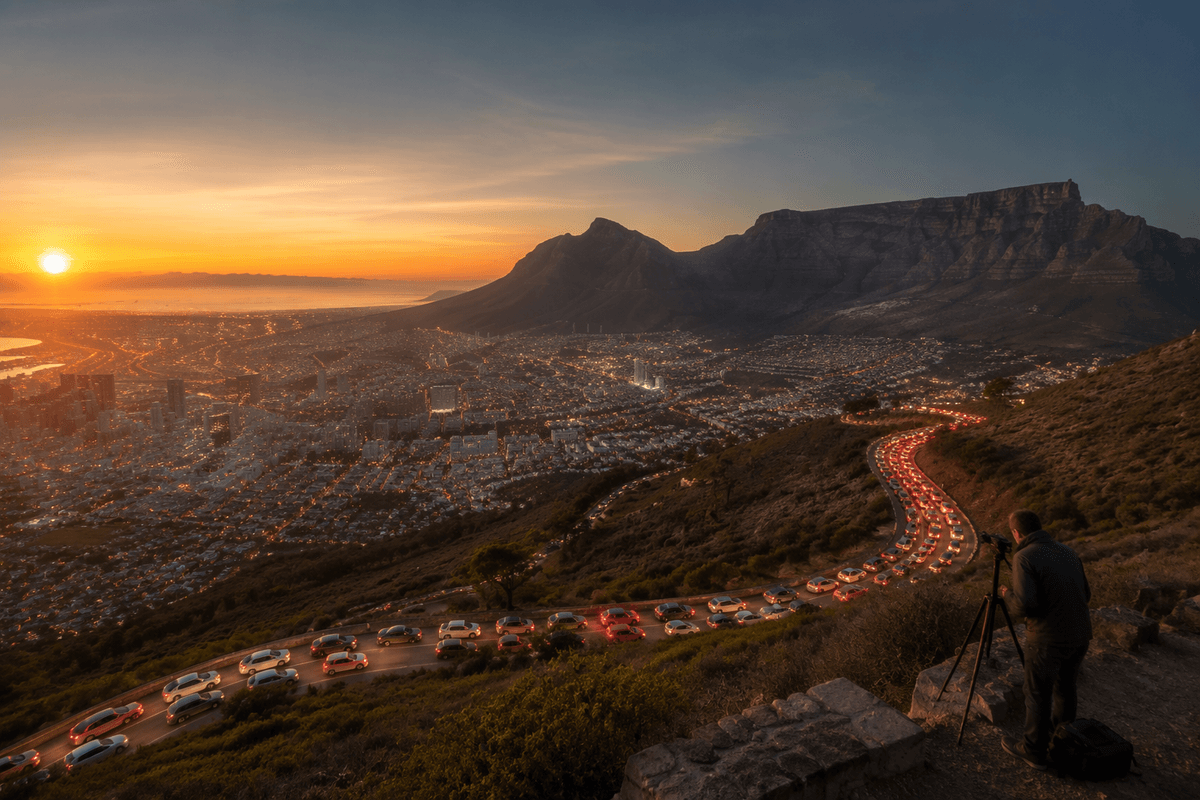
I almost bailed on Signal Hill when my driver texted “5 min” and the road ahead looked like a slow-moving ribbon of taillights. A guy next to the pull-off was already setting up a tripod on the hood of his rental, like he’d done this exact sunset before. The light was good, but the clock was louder.
If you want “Cape Town in one frame” without a hike, Signal Hill is the cleanest trade: fast access, big payoff, and you can retreat the moment wind bites or cloud slides in. It works best 45–60 minutes before sunset, when the city starts to glow but you still have enough daylight to navigate back down. The limitation is crowd flow—cars double-park, viewpoints fill, and Ubers sometimes hesitate at the top because the turnaround turns chaotic.
For a similar city-bowl panorama with fewer moving parts, I like the lower Table Mountain viewpoints along Tafelberg Road (think Kloof Corner area) because you get elevation and layers without committing to the cableway queue or last-car stress. The trade-off is subtle: you’ll see less “wow, I’m on top of the world,” but you gain flexibility—arrive earlier, leave later, and you’re not trapped by a closing gate or a wind shutdown mid-plan.
If visibility is questionable, I treat these as my “test shots” spots: quick to reach, quick to abandon. When the mountain finally clears, then I’ll spend the bigger effort—or money—chasing the summit.
Where the Atlantic steals the show
At 5:32 p.m. my map insisted the fastest route to Camps Bay was “12 min,” but the reality was a line of idling cars and someone trying to parallel-park a rental the size of a small bus. I hesitated at the drop-off, watching the sun slide toward the water while the wind slapped sand across the sidewalk. It was the first time the Atlantic felt less like a backdrop and more like the main character.
Atlantic-facing viewpoints win when you want dependable light without betting your evening on a summit clearing. Camps Bay and Clifton give you instant, dramatic color at sunset—more forgiving in haze than the peaks—yet the trade-off is crowd flow and micro-logistics: parking turns into a sport, Ubers can crawl, and the promenade gets shoulder-to-shoulder exactly when you want space for a tripod. If you’re solo and mid-budget, it’s a strong “arrive, shoot, exit” stop—just plan to be there 45–60 minutes before sunset so you’re not spending golden hour in traffic.
When you want the Atlantic look with fewer moving parts, I’d rather nudge away from the obvious hotspots: Oudekraal is gorgeous but can feel gate-and-hours dependent, while Bakoven’s quieter pockets trade convenience for a bit more walking and less signage. The ocean option doesn’t give you the city-bowl depth of Signal Hill, but on a windy day it’s the safer bet for usable photos—so if the mountain is wearing its cloud “lid,” I’d let the coastline take the sunset and save the peaks for a clearer morning.
Quieter alternatives when it’s crowded
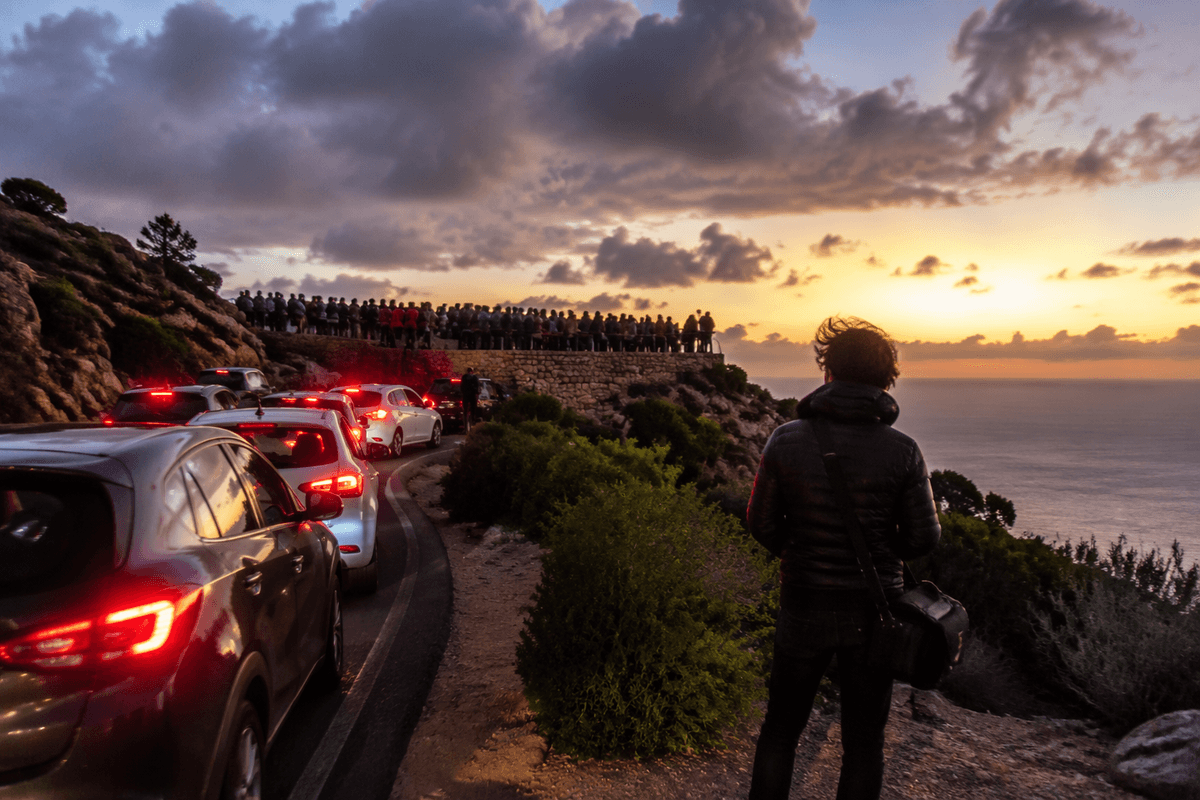
I realized I’d mis-timed the whole evening when my Uber stopped short of the usual pull-off and the driver said, “Traffic’s not moving up there.” It was 18:02, the wind had picked up, and the line of cars looked like it would outlast the light. Standing on the roadside with a camera bag and nowhere obvious to stand, the “popular viewpoint” started feeling less like a plan and more like a bottleneck.
When Signal Hill or Camps Bay is packed, I like switching to viewpoints that don’t require one perfect parking spot. For a city-facing angle, Deer Park or the Molteno Reservoir area gives you elevation and clean skyline layers with a calmer, local rhythm—more joggers than tour buses—at the cost of a slightly less “postcard” frame. For the Atlantic without the promenade crush, Maidens Cove often hits a sweet spot: you get Twelve Apostles behind you and ocean color in front, but it’s less of a single choke point than Clifton’s beach entrances.
If you’re solo and chasing sunset photos, the trade-off I’d take is “one stop, easier exit” over “best stop, longest exit.” A quieter pull-off along Victoria Road can outperform a famous pin simply because you’re shooting instead of circling. Just aim to arrive 30–45 minutes before sunset; the later you cut it, the more crowd flow and wrong-turn recovery steal the usable light.
What I’d do with one day
I stood in the cableway line at 8:41 a.m. with a blue patch of sky teasing the summit, then watched it disappear behind the “tablecloth” in under five minutes. My phone showed wind picking up, and I hesitated—do I commit to a queue, or cash out early and salvage the morning? That moment is why my one-day plan is built around pivots, not hero shots.
If I only had one day and I cared most about usable photos with low-hassle logistics, I’d treat Table Mountain as the “high reward if it’s behaving” play: go early, check the live status, and only ride up if visibility looks stable for at least an hour. If it’s socked in or winds look sketchy, I’d skip the summit entirely and take an Uber to a lower, fast-payoff spot (Signal Hill or a Tafelberg Road viewpoint) where you can test the light without burning half the day on a maybe.
For sunset, I’d pick exactly one Atlantic stop based on crowd tolerance: Camps Bay if you want the classic scene and can handle slow exits, Maidens Cove if you’d rather be shooting than jockeying for space. The trade-off is simple—iconic promenade energy versus calmer logistics—and for a solo traveler I’d bias toward the easier exit so you’re not hunting for a ride in full dark. If the wind is rude, I’d still go; ocean light forgives a lot.