Intro: New Year budget, big sparkle expectations
The first week of January has a way of turning “let’s be practical” into “let’s make it feel big.” You open a few tabs, see a 2.00-carat photo glowing under perfect lighting, and suddenly a $6,000 idea and a $12,000 reality are living in the same browser window. Meanwhile, the real number isn’t just the stone—it’s the stone plus setting, taxes, and the insurance quote you haven’t gotten yet.
The tricky part is that diamond pricing rarely signals what’s actually driving the cost. Two stones can look nearly identical on-screen while one quietly bakes in a premium you’ll never notice day to day. Before the sparkle momentum picks up, it helps to decide what “worth it” means in your budget—then shop like you’re testing claims, not chasing photos.
Set your total spend limit before seeing any diamonds
That “testing claims” mindset gets harder the moment you start sorting by carat and seeing prices jump in $500–$1,000 steps. So the constraint has to land first: a total number that already includes the parts retailers love to keep off the headline. For most $2k–$20k buys, the quiet swing factors are the setting (often $500–$3,000+), sales tax, shipping/returns timing, and an insurance premium that may feel small monthly but changes what you’re committing to annually. If the total cap is $10,000, a $9,500 stone isn’t “close”—it’s a plan that depends on discounts, not math.
In practice, it helps to split the cap into lanes before you browse: “stone budget” and “everything else.” Even a simple 75/25 or 80/20 split forces trade-offs early, when they’re cheapest to make. Then add two rules that keep momentum from rewriting the limit: first, only compare stones inside your stone budget before promotions; second, treat any financing offer as a separate decision with its own cost (fees, interest after a teaser period, return windows). You’ll feel slightly underpowered in the search filters—and that’s the point.
Use calendar timing to find real price slack
Once the cap is real, the next lever is time—because diamonds aren’t priced like groceries. What moves is the retailer’s willingness to give margin back when they need volume, clear aged inventory, or hit a month-end number. If you start shopping with a “need it by” date (proposal trip, anniversary, or a loose “sometime this spring”), you can test how much slack exists by running the same specs at different moments and tracking whether discounts deepen or free upgrades suddenly appear. The constraint is emotional as much as financial: a hard deadline makes you pay the convenience premium.
In my experience, the most predictable negotiation windows are tied to the calendar, not romance: late month-end, quarter-end, and the quieter stretch after big gifting peaks when return windows close and marketing volume drops. The trade-off is timing risk—if you wait for a better price, your exact cut/carat combo might disappear, and re-order lead times (plus resizing) can eat a week or two. So the practical move is to set a “buy-by” date that’s earlier than your real deadline, then use that buffer to ask for price matching, setting credits, or comped shipping without turning the whole purchase into a race.
Trade size for sparkle in the right places
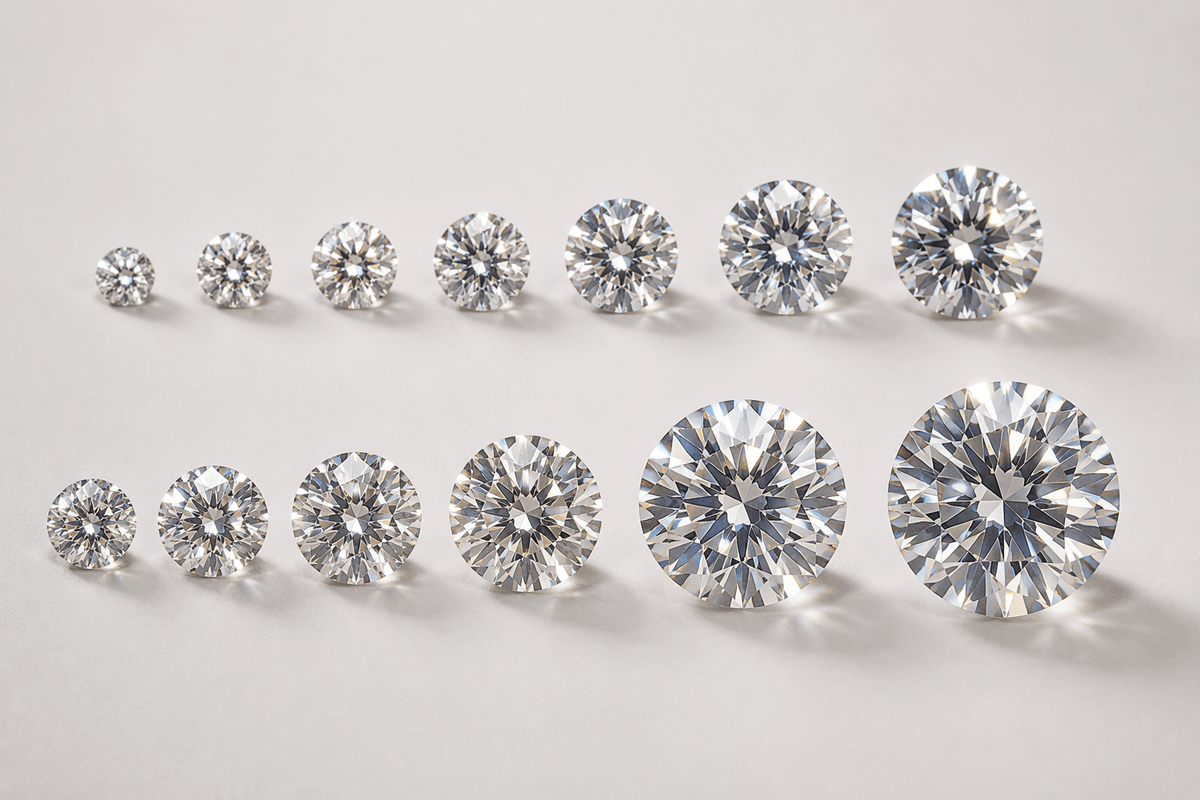
By the time you’ve got a buy-by date, the next pressure point is carat. It’s the cleanest number to brag about, and it’s also where budgets get quietly wrecked by “just a little bigger.” The trick is to decide where you’re willing to give up millimeters so you can buy back visible performance. In a $2k–$20k range, most people get more day-to-day payoff from a stone that returns light aggressively than from one that merely crosses a round number on the certificate.
I’d treat cut quality as the non-negotiable and use carat as the adjustment knob. That often means shopping just under the common thresholds (0.90 instead of 1.00, 1.80 instead of 2.00) to dodge the step-up pricing, then reallocating that savings into proportions and polish/symmetry that keep the diamond lively in normal indoor lighting. The constraint is availability: the “right” near-threshold stones sell fast, so you may need to widen color or clarity slightly rather than forcing the exact carat.
Clarity is usually the easiest place to trade, but only if you force it into real viewing conditions. If an SI1 is truly eye-clean at normal distance, paying for VVS can be an expensive spreadsheet win with no visual upgrade. Color is similar: moving a grade or two can fund better cut or a more protective setting, especially if you’re already planning yellow gold. The point isn’t to buy lower quality—it’s to stop paying premiums for traits you won’t actually experience.
Pick lab or natural after defining your value story
After you’ve accepted that cut is the guardrail and carat is the dial, the lab-vs-natural question stops being a moral debate and turns into a budget narrative. One version of “worth it” is maximizing what you see: more size or higher color/clarity inside the same total cap, with the expectation that the ring is primarily a consumption purchase, not an asset. The other version is paying for scarcity and tradition, knowing you’re buying into a market that prices “natural” as a category premium even when the face-up look is similar.
I’d pressure-test it with one constraint: what do you need the ring to be worth to you in five years? If resale is even a small part of the story, natural tends to keep more coherent secondary-market demand, while lab pricing has been more volatile and retailer-dependent. If you don’t plan to sell, lab can be the cleaner value play—then you can redirect dollars into a better setting, a larger stone under a key threshold, or simply a lower insurance burden. The mistake is mixing stories: paying a natural premium and still shopping like you’re chasing lab-style “more for less.”
Don’t leak savings on the setting and add-ons
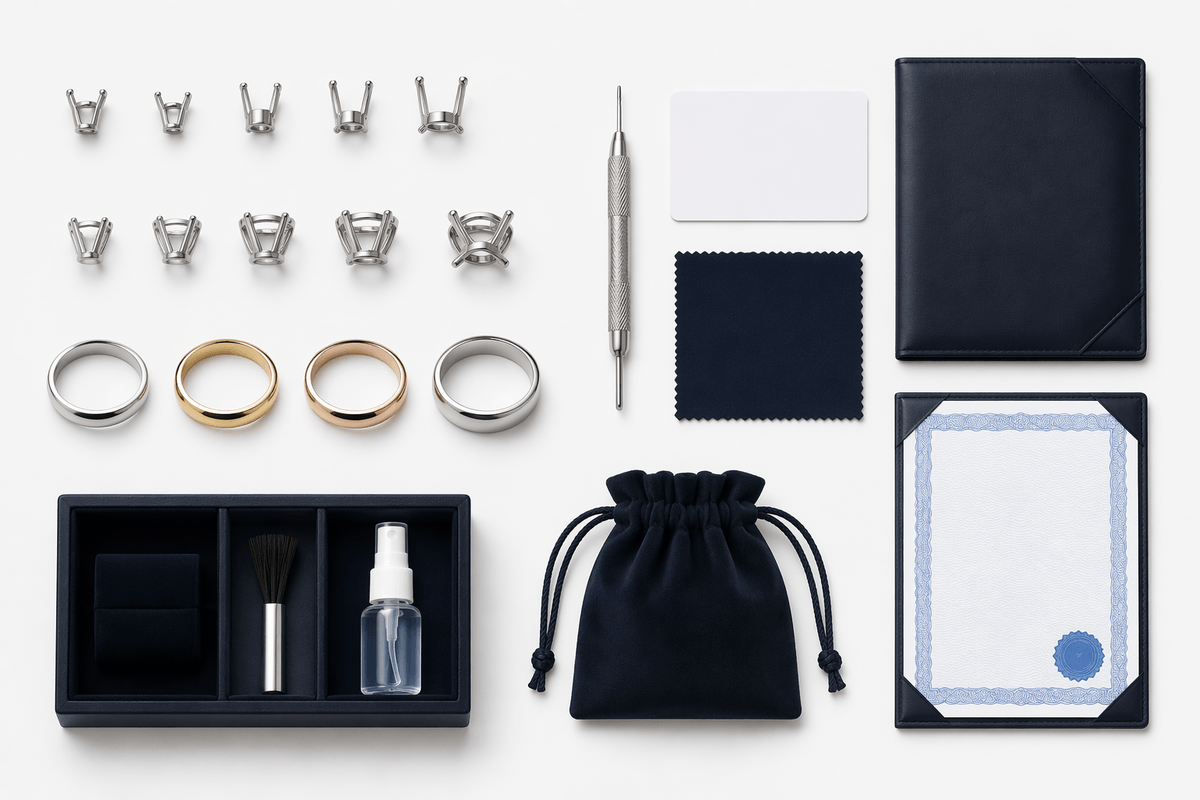
Once the stone choice is basically locked, the budget tends to relax at exactly the wrong moment. The setting starts feeling “small” compared to the diamond, and that’s when $300 decisions stack into $1,500 without much to show for it. The constraint to keep front and center is durability plus lead time: rush orders, custom CAD tweaks, and last-minute resizing can add real cost, and they can also narrow your return window if the ring ships late.
I’d treat the setting like a performance part, not a styling afterthought. If you saved money by going just under a carat threshold or choosing lab, don’t immediately hand it back via branded halos, hidden accents, or premium metals you won’t notice day to day. Pay for what protects the stone (a secure head, appropriate prong thickness, a design that sits well with a future band), then keep the rest simple. A plain solitaire or clean pavé can photograph the same while costing meaningfully less.
Then audit the “extras” like a reviewer: appraisal fees, engraving, extended warranties, cleaning plans, and especially insurance. Some add-ons duplicate what a good jeweler already includes, while others push you into covering a ring value inflated by retail markup. The goal isn’t to strip everything—it’s to stop the checkout page from quietly rewriting the careful trade-offs you already made.
Conclusion: A quick checkpoint before you commit
Right before you hit “buy,” it’s worth slowing down for one last checkpoint, because this is the moment marketing turns into momentum. Pull your numbers into a single line: stone price, setting, sales tax, shipping, appraisal, and the first-year insurance estimate. If that total is higher than the cap you set in January, don’t bargain with yourself—either step down a carat tier, simplify the setting, or widen one grade on color/clarity. The fastest way to overpay is to “solve” a math gap with hope.
Then sanity-check the non-price constraints you’ll regret later: delivery date, resize timeline, return window, and what documentation you’ll actually receive (grading report, receipt detail, insurance-friendly description). If two options still tie, pick the one with the cleaner value story—cut quality you can see, and trade-offs you can explain without defending them.