Gran Canaria isn’t one beach day
The map looked neat until the bus timetable didn’t: at 9:10 a.m. in Maspalomas, you’re staring at a sunlit promenade while the inland route you meant to take only runs every so often. It’s the kind of hesitation that turns “quick island hop” into a half-day commitment. Gran Canaria rewards movement, but it also punishes sloppy sequencing.
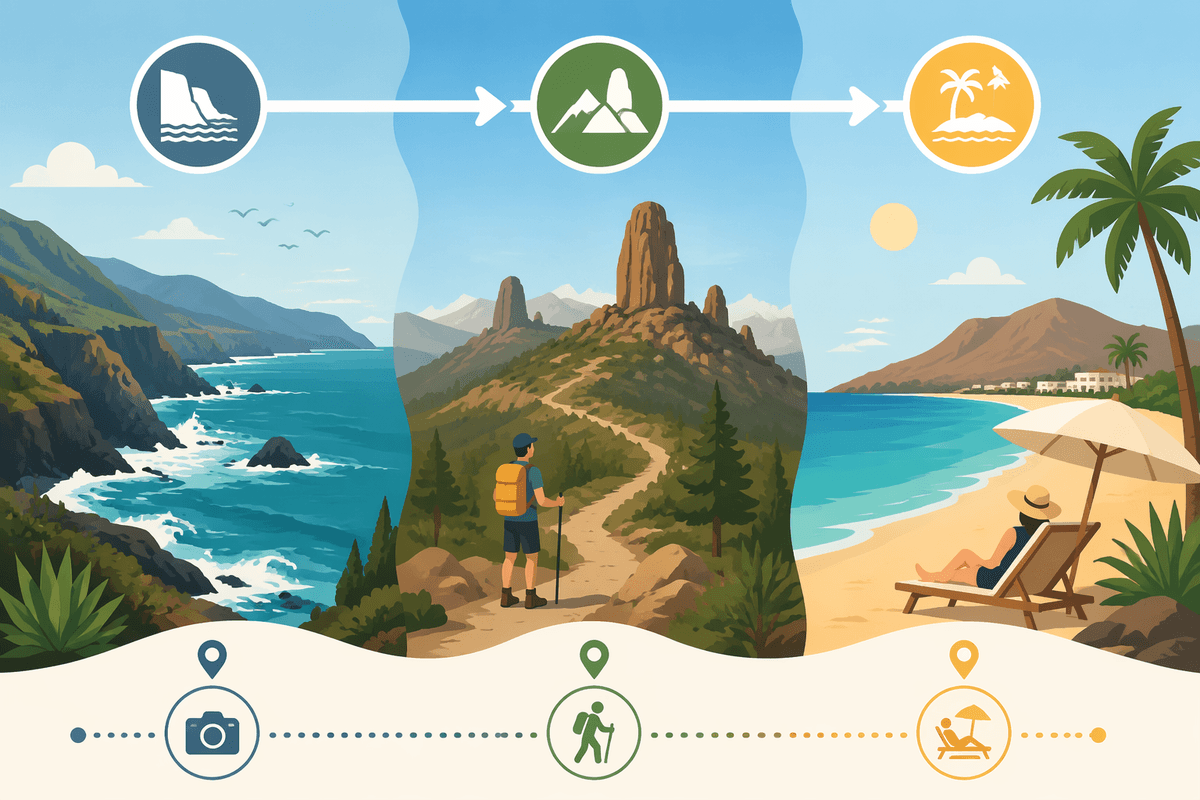
If you stay south and want the lowest-effort wins, keep it coastal: Maspalomas dunes at golden hour, then a short hop to Meloneras for an easy dinner and a calmer walk than Playa del Inglés. It works when you’re beach-forward and tired; it doesn’t scratch the “real island” itch. For that, trade sand time for a north-side city hit—Las Palmas’ Vegueta (old streets, museums, shaded plazas) feels more lived-in than resort strips, but the round trip can eat your daylight if you wait until after lunch.
The high-payoff, higher-friction lane is inland: Tejeda and the Roque Nublo area deliver the “wow” views, yet they’re slow by bus and parking can get annoying at peak hours. A rental car buys flexibility (sunrise drives, stopping when a viewpoint surprises you), while a tour buys simplicity (no hairpin-road stress, fixed timing). Either way, pick one big direction per day—north or mountains—because trying to “just add” a village usually turns into windshield time.
With one day, go south to north
At 8:05 a.m., with coffee still too hot to drink, the highway signs toward Las Palmas make the island feel smaller than it is. Then you glance at your phone: a “quick” stop in Puerto de Mogán is already a 25-minute detour in the wrong direction, and the bus you’d rely on doesn’t line up with your breakfast pace. That’s the moment the map stops being cute and starts negotiating with your daylight.
For one day, the cleanest arc is south-to-north with one deliberate pause, not a scatter of “just five minutes” viewpoints. If you have a rental car, leave Maspalomas before 9:00, take the GC-1 straight up, and aim to park once in Las Palmas (underground garages save you the circling fatigue). Vegueta works best late morning when the streets are shaded; tack on a long market-style lunch and you’ll feel the city rather than sprint through it. The trade-off: you’ll sacrifice a proper swim unless you plan for it.
No car? You can still do it, but it rewards couples who are fine with fewer stops and tighter timing. Take an early direct bus north, commit to Vegueta + Triana on foot, then decide between Las Canteras beach for a sunset walk (easy, restorative) or a quick museum hit if wind rolls in. Trying to wedge in an inland village on the same day usually turns into waiting around, and the “culture” ends up being a bus station café.
With three days, add mountains and villages
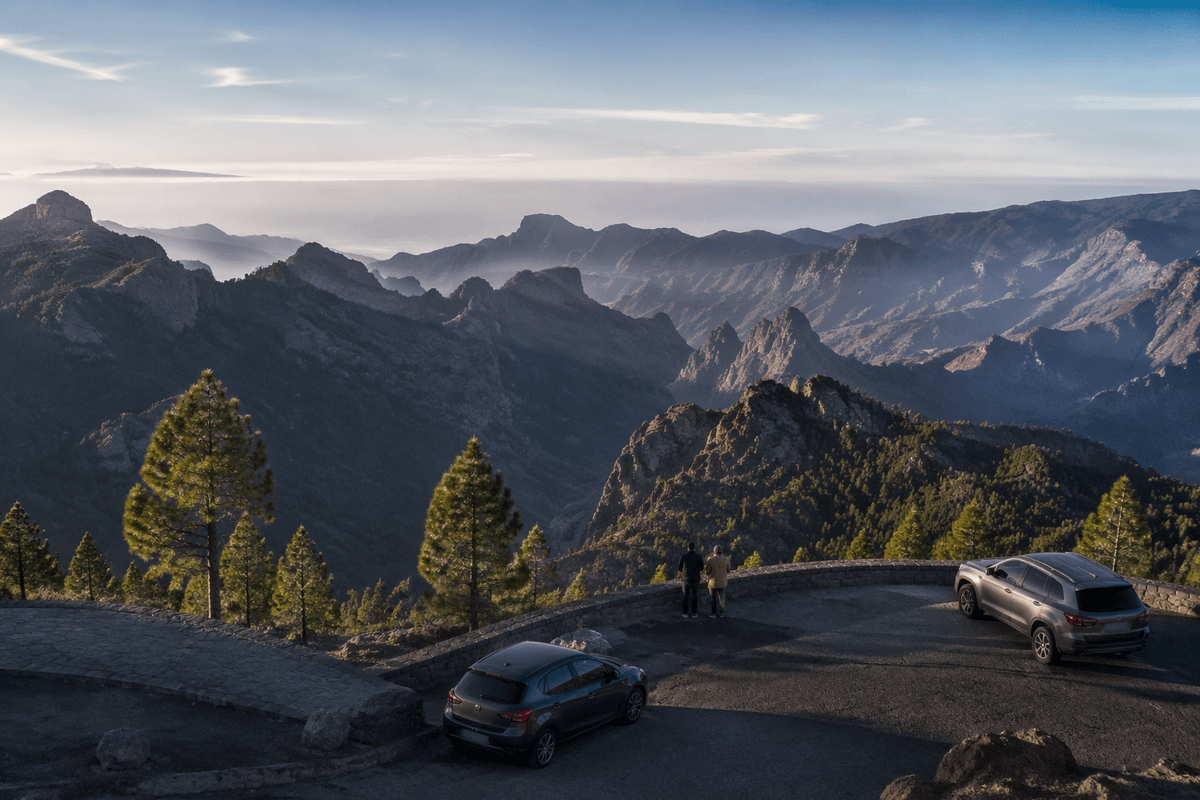
By the third morning, the resort breakfast starts to feel repetitive, and at 7:45 a.m. you’re googling “Roque Nublo parking” while tugging on a light jacket you didn’t pack for the south. The air in Maspalomas is already warm, but the photos up high show people in hoodies. That mismatch is your cue: the mountains aren’t a “pop-in” between beach naps.
If you have three days to play with (and you’re staying in Maspalomas), think in two lanes: one north day, one mountain day, one coast-recovery day. The mountain day is the big trade-off—less swimming, more driving—so it pays to do it properly: Tejeda for the village feel, then a viewpoint loop toward Roque Nublo, with an early start to dodge the worst crowd flow on the trails and the circling-for-a-space routine. A rental car makes this day feel like yours (stop when a mirador is actually good), while a tour makes it calmer (no hairpin-road nerves, no parking chess), but you give up the freedom to linger when the clouds open for five perfect minutes.
It can still work, just not with the same “collect villages like stamps” energy. Pick one inland hub—Tejeda or Artenara—then accept the limitation: buses are slow and infrequent, and the timing pressure can turn a scenic lunch into a clock-watching exercise. Save your beach-heavy day for when the wind picks up in the north; you’ll appreciate the easier rhythm after a mountain day that quietly steals more energy than it looks like on the map.
With a week, chase microclimates and hikes
At 10:30 a.m. you’re pulling on a thin hoodie in Cruz de Tejeda, even though you left Maspalomas in shorts an hour earlier, and the car thermometer is reading a number that feels like a different month. The clouds are snagging on the ridge, the view comes and goes in five-minute windows, and suddenly your “we’ll just see what happens” plan has a weather deadline. Gran Canaria does that: the same day can be beach-simple or mountain-fussy depending on where you point yourselves.
With a week, the payoff is chasing the island’s microclimates on purpose rather than fighting them. Keep two south days genuinely slow (dunes at sunset, an easy swim when you’re already sandy), then spend your effort where it buys “wow”: one high-mountains day for Roque Nublo plus a short walk (go early to avoid the parking spiral and the clump-on-the-path crowd flow), and one greener-north day when the south is blazing—think a shady stroll around Firgas/Arucas or Los Tilos de Moya if you want “real island” without a full-on hike. The trade-off is obvious: every inland win costs you beach hours, so pair a big drive day with a low-stakes evening back in Maspalomas.
If you’re undecided on a car, this is where it starts to matter: microclimate-hopping works best when you can pivot—clouded in at the summit, drop to a sunnier mirador or head toward Agaete for late lunch. No car can still be great, but it suits couples who prefer committing to two guided days (mountains + west/north) and letting the bus handle one city/coast day. When you catch yourselves checking timetables more than views, that’s the cue to simplify tomorrow.
If you have longer, slow-travel deeper
At 6:40 p.m., you’re on your balcony in Maspalomas, half-watching the light fade over the dunes while your phone refreshes the same three inland guesthouses—two are suddenly “no availability,” and the last one wants a two-night minimum. It’s not dramatic, just mildly irritating in the way that makes you put off the “real island” plan until tomorrow. Gran Canaria rewards spontaneity at the beach; it’s less forgiving once you aim for small villages with limited rooms and early dinners.
If you have longer, the high-payoff move is to stop commuting from the south every day and do a split stay: keep Maspalomas for the easy swims and sunsets, then give yourselves 2 nights either in Las Palmas (for Vegueta evenings that don’t require a highway dash) or in the interior around Tejeda/Artenara (for mornings when the viewpoints aren’t a parking contest). West coast overnights near Agaete work beautifully for couples who like quiet and late lunches, but it’s a trade-off—fewer “big sights,” more time actually feeling the place. Slow travel here isn’t about ticking more stops; it’s about seeing the same ridge twice, in different light.
On the car question, a middle path often fits best: rent for 2–3 days to cover the mountains + west in one clean loop, then return it and let buses/taxis handle Las Palmas or a rest day without hunting for parking. No car can still work if you’re happy committing to two guided days and accepting that some pretty villages become “look, lunch, leave” under timetable pressure. If you’re arguing over whether a mirador is “worth the drive,” that’s usually the cue to change the base, not just the itinerary.
Where plans usually go wrong here
At 2:15 p.m., you’re standing in the shade by a bus stop in Maspalomas with salt still on your skin, realizing the “quick” inland plan now starts in the hottest part of the day. The timetable says it’s coming, but the connection you need later is the fragile one, and you can already feel the trade: either rush lunch or lose the village. This is where Gran Canaria quietly punishes beach-first spontaneity.
The most common misfire is stacking “small” stops across different directions—Mogán, then Tejeda, then Las Palmas—because each looks close on the map. By the time you’ve parked, walked, and found a table, the daylight gets thin and the drive feels longer on the way back, especially if you’re tired and the road is curvy. A better rule is one big geography per day: south coast recovery, north city, or mountains. It’s less braggy, but it actually leaves you time to sit somewhere pretty.
Car vs no car usually breaks on timing. Buses work when you’re happy with one anchor (Vegueta, or a single inland hub) and you don’t mind hard commit times; they’re rough for mirador-hopping and “we’ll stay if it’s good.” If you’re booking as you go, rent a car for just your mountain/west loop days, start early, and plan one flexible stop you can skip without regret when clouds, crowds, or parking make the decision for you.