The real choice isn’t activity, it’s vibe
I hesitated at the Circular Quay light rail platform at 8:12 a.m., staring at two tabs in my spreadsheet: “Blue Mountains day trip” and “harbour sailing.” On the map they were both neat blocks of time; in reality, one meant herding 10 people through multiple transfers and a 6:30 wake-up, while the other meant a 15-minute walk and a fixed departure you can’t miss. That tiny difference in friction is usually what decides whether the group bonds or splinters.
For a 3-day Sydney-based weekend, the real choice isn’t “escape room vs hike” so much as what vibe you’re buying: high-tempo, low-decision momentum, or slower, chat-first time with room for mixed fitness. Big “wow” activities tend to be brittle—one late coworker, a blown booking slot, or rain, and you’re suddenly spending the morning in queues or replanning over coffee. More accessible options can feel less headline-worthy, but they’re forgiving: easier meeting points, shorter commitment windows, and less social pressure on the least-fit person.
I’d use a simple filter before you even compare prices: how many times will you have to regroup, and how many hard start times are there? If your team has a couple of “always late” people or anyone nursing an old knee, choose plans where the penalty for timing drift is mild. When you want genuine bonding, the best itinerary often looks slightly boring on paper—and works better on the ground.
High-energy wins for friend groups
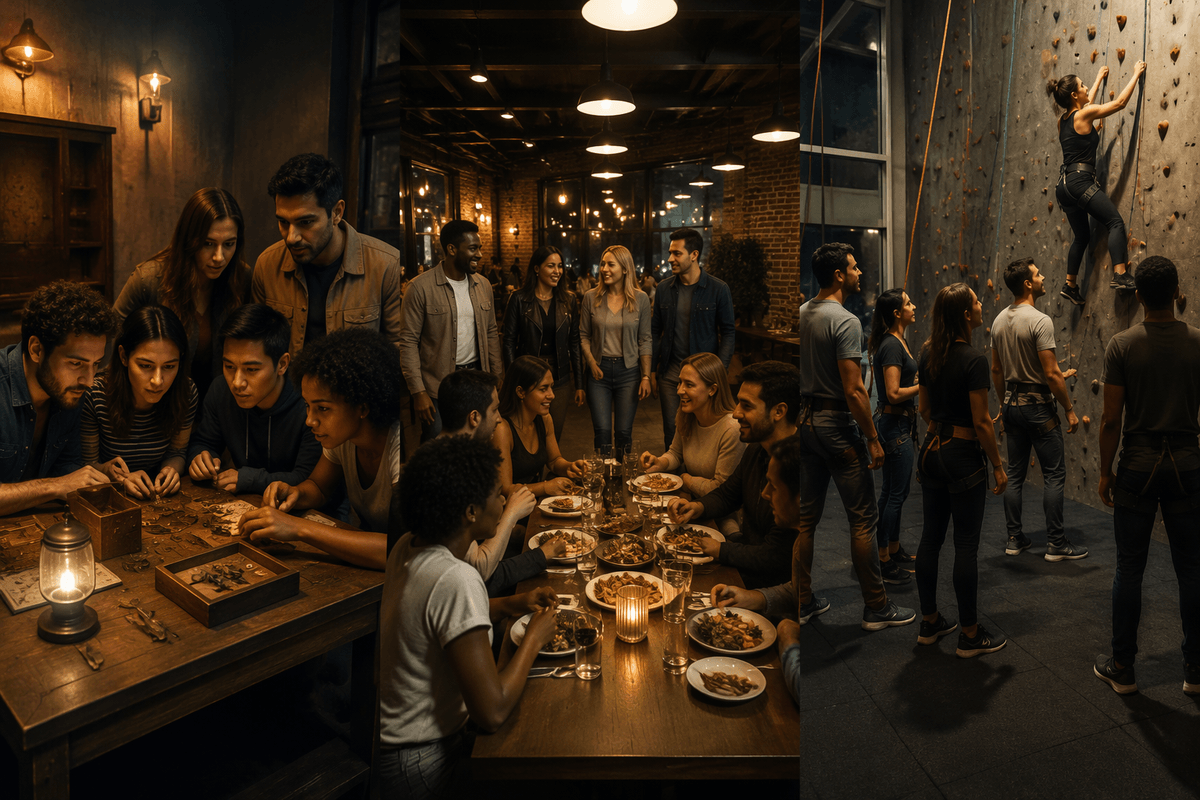
At 6:47 p.m. on a Friday, I watched a group of ten hover outside an escape-room lobby in Haymarket while two people finished a late kebab and someone tried to merge tickets from three different inboxes. That tiny window before your booking time is where high-energy plans either snap into place or turn into a negotiation. Compared with “meet at a trailhead,” it’s more predictable—if you pick venues that can actually hold 8–12 without splitting the vibe.
For maximum momentum with minimal weather risk, I like an indoor “stack” you can book in fixed blocks: escape room (60–90 minutes) followed by a walkable dinner and something tactile like axe throwing or indoor climbing. The trade-off is cost per head and the fact that some venues cap teams at 6–8, so you either book two adjacent sessions or accept a split-and-compare format (which can be fun if your group likes friendly competition, less so if you’re trying to keep quieter people included).
If you want outdoor energy without the all-day fragility of a big day trip, a harbour jet boat or short sailing session buys you adrenaline with a clean start/finish—just price in the reality that one late arrival can waste the whole slot. I’d keep a rain-proof backup pre-held for the same afternoon (an arcade bar, bowling, or a second escape room), so you’re not crowdsourcing Plan B from the group chat when everyone’s already tired.
Easy, inclusive days for mixed ages
At 10:26 a.m. I watched our group hesitate at the Circular Quay wharves, the departure board flicking between Manly and Taronga while one coworker hunted for a flat white and another quietly tested a sore ankle. On a map, both were “a ferry ride”; on the ground, the difference was whether you’re committing to a long coastal walk or a mostly seated day with optional effort. That’s the kind of choice that keeps mixed ages and fitness levels from feeling like a compromise.
If you need an easy win that still feels like Sydney, I’d book a harbour ferry + one anchor stop: Taronga Zoo (minimal walking if you plan your loops) or Manly with a strict “choose your own pace” window (swim, short promenade, or just lunch). Compared with a Blue Mountains push, you trade peak scenery for fewer regroup points and less chance of someone falling behind. Miss the ferry and you don’t just lose minutes—you lose the group’s rhythm.
For rain or low-energy afternoons, I like a two-hour block you can lock in: a museum/gallery session (Australian Museum, MCA) followed by a pre-booked group dinner within one precinct (The Rocks or Darling Harbour), so late arrivals don’t derail the whole plan. It works for teams that want chat-first bonding; it’s weaker if your group needs adrenaline to loosen up. I’d still pencil a short optional walk after dinner—if the weather holds, it feels like a bonus rather than a requirement.
Team-building that doesn’t feel forced
I stalled at 3:58 p.m. with a booking form open, trying to decide whether to lock in a “team challenge” that needed everyone checked in by 4:15, or a cooking class in Surry Hills where late arrivals could still chop and catch up. The venue email was clear about it: one no-show changes the pricing, and they wouldn’t hold the start. In a spreadsheet it’s just a time block; in real life it’s whether you spend the first 20 minutes corralling people who swear they’re “two minutes away.”
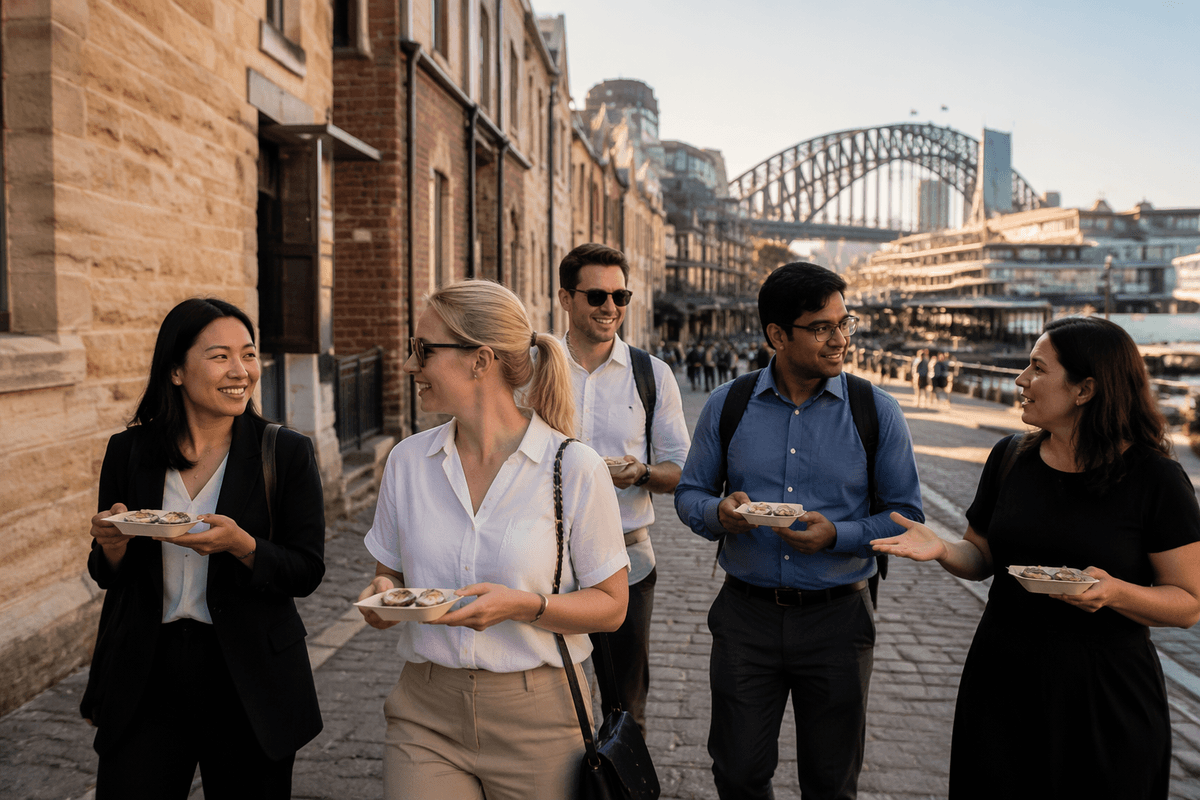
For team-building that doesn’t feel like HR theatre, I like activities where the bonding is a side effect of doing something tactile: a dumpling/pasta cooking class, a cocktail class, or a small-group food tour (The Rocks or around Barangaroo) that you can book as a private slot. Compared with an escape room, the win is lower social pressure—quieter coworkers can contribute without “performing”—but the limitation is dietary needs and the fact that you’re paying for a host, not just a room. Keep it to 90–120 minutes so it doesn’t eat the whole evening.
If your group actually wants a little structure, a city scavenger hunt works better than a “trust fall” because people can self-sort into 3–4 teams and walk at different paces, then regroup for dinner. It’s great in light sun, annoying in real rain, so I’d only book it if you can pivot to an indoor class in the same suburb. When you’re torn, pick the option where the least-keen person can still have a decent time without pretending.
What I’d book for your group
At 9:03 a.m. I’d be on my phone, hovering over the “confirm booking” button while the forecast toggled between showers and “clearing late.” That’s usually when I stop pretending we’ll “decide on the day” and lock in one fixed-start anchor with a forgiving second block. The concrete detail I plan around: if two people are 12 minutes late in Sydney downtown, you can still salvage dinner; you can’t salvage a missed ferry or a hard 10:00 a.m. check-in.
For a 3-day Sydney-based weekend with 8–12 coworkers, I’d book (1) a private cooking or cocktail class in Surry Hills (90–120 minutes) on night one: it’s social without being loud, and late arrivals can slide in without breaking the flow. Then (2) a harbour ferry day with one anchor—Taronga Zoo or Manly—with a defined “regroup time” rather than a forced walk; compared with a Blue Mountains run, you trade brag photos for fewer transfers and less knee/fitness drama.
To cover rain and decision fatigue, I’d pre-hold (3) an escape room in Haymarket or the downtown, but plan for two adjacent sessions if the venue caps teams at 6–8—split-and-compare works if your group likes friendly competition, less so if you need everyone together. If you still want something that feels “weekend,” I’d make the last booking simply (4) a set-menu group dinner in one precinct (The Rocks/Barangaroo), then let the night float; the cue I use is whether the team is leaning in or quietly counting minutes.