Pack prevention now, not pharmacy runs later
The first mistake I’ve watched remote workers make in Bangkok is assuming “I’ll just grab it at 7‑Eleven if I need it.” You can—but the cost is time: hunting brands you don’t recognize, translating ingredients, and losing an hour you meant to spend working (or sleeping) after a long transfer day.
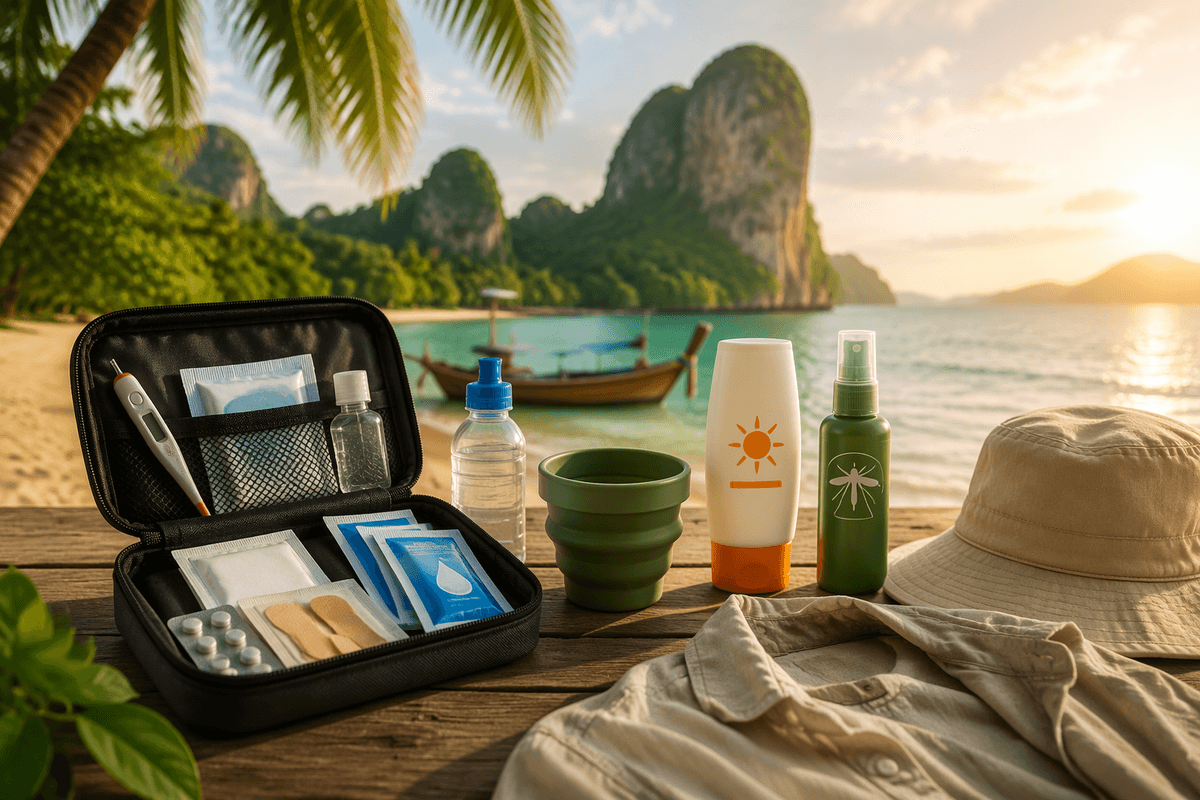
Pack a small, boring prevention kit that covers the highest-frequency problems: oral rehydration salts (a few packets), loperamide for short-term control, a basic electrolyte bottle or collapsible cup, a couple alcohol wipes, blister patches, and a mini thermometer. Add what you can’t easily replace mid-trip: your preferred sunscreen (enough for 12 days), DEET or picaridin you already tolerate, and any prescription meds in original packaging. Skip the “full pharmacy” mentality—duplicates and novelty supplements add weight fast, and most cities have pharmacies everywhere. The goal is not to self-treat everything; it’s to bridge you through the first 24 hours of a stomach bug or heat crash without panic-buying or missing work.
Before you fly: shots, meds, insurance
I hesitated here because “Thailand/Vietnam” triggers a flood of forum opinions—some people get five shots and a malaria regimen, others show up with nothing but optimism. The way I’ve made it manageable is to decide what I’m protecting: work days. If you can, book a travel clinic appointment 4–6 weeks before departure so anything multi-dose has time to work; if you’re closer in, still go—many vaccines and prescriptions are worth it even when they’re last-minute.
Start with the unglamorous basics you can verify quickly: routine immunizations up to date (especially tetanus), then ask specifically about Hepatitis A and typhoid, because they map to the exact risks you’re trying to avoid (food and water mistakes). Everything else gets judged against your itinerary. Beach towns and city hopping can mean lots of dusk walks and day trips; some meds are only “necessary” if you’ll be rural, trekking, or staying far from clinics. Bring your regular prescriptions in original packaging plus a digital copy of the prescription—customs questions are rare, but running out mid-trip is not.
Insurance is the part people skip until they’re dehydrated in a clinic paying out of pocket. Look for coverage that includes outpatient visits, prescribed meds, and medical evacuation; then check exclusions that actually matter on this trip (scooter accidents, snorkeling/diving, pre-existing conditions). If your policy offers 24/7 telemedicine, save it before you fly—it’s a small feature that can keep a “maybe food poisoning” day from turning into a lost weekend.
Heat and humidity: hydrate without mistakes
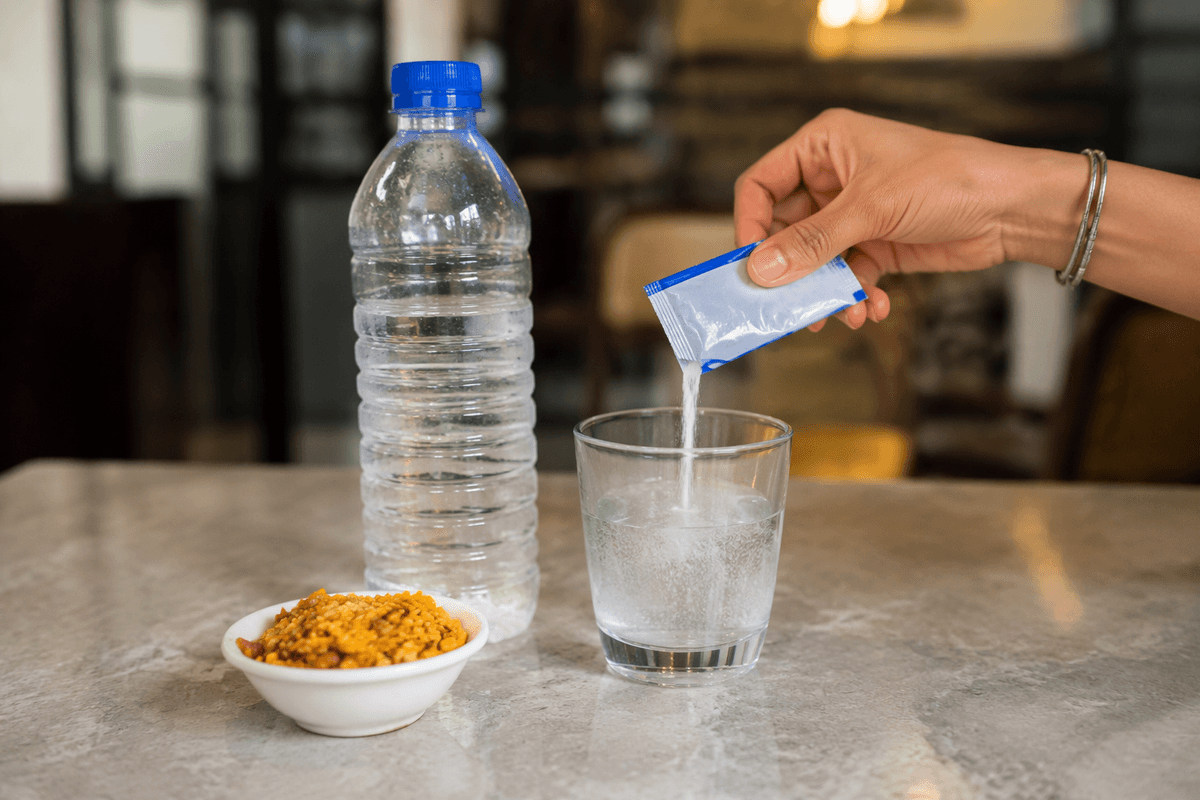
The first time the heat really got me in Southeast Asia, it wasn’t a dramatic “heat stroke” moment—it was a slow leak: a long walk to a café, a sweaty BTS transfer, then sitting down to work and realizing my brain was running at 60%. The mistake is thinking hydration is just “drink more water.” In Bangkok or Ho Chi Minh City humidity, you can be chugging bottles and still feel wrecked because you’re replacing fluid but not salts. That’s where those oral rehydration packets earn their luggage space: one after a heavy sweat commute or a beach afternoon works better than doubling your water intake and hoping for the best.
What doesn’t work well is treating every lightheaded moment like an emergency with sugary sports drinks. They’re easy to find, but they can turn into a constant trickle of sugar (and bathroom breaks) that doesn’t actually stabilize you during a work day. My practical compromise: plain water as the baseline, ORS when you’ve had hours of sweating or any diarrhea, and salty food earlier than you think you “need” it. Also, plan your day like a local would: errands and outdoor temples early, a midday indoor buffer (mall, café, hotel) when the sun is punishing, and a hard stop if you stop sweating, get a headache that ramps fast, or feel nauseated—those are the moments that cost you tomorrow’s work block if you push through.
Mosquito protection beyond bug spray

The first time I realized “I used repellent” wasn’t the same as “I was protected” was on a beach evening when the breeze died. I’d done the quick spray-on-the-ankles routine, sat down for dinner, and then spent the next day counting bites like a scoreboard. The friction is that your riskiest exposure isn’t the big hike you planned for—it’s the casual dusk walk to find Wi‑Fi, the scooter ride with bare calves, the rooftop drink where you’re sitting still.
Bug spray is the baseline, but the upgrades that actually change outcomes are physical and behavioral. Lightweight long pants and a loose long-sleeve shirt (not fashion-heavy, just breathable) beat another layer of chemicals when you’re sitting outside at dusk. If you’re choosing between packing one more “just in case” medication or a pair of thin, packable pants you’ll actually wear, the pants win. In cities, I also like booking lodging with reliable A/C or at least good window screens—mosquitoes don’t care that you’re “only” inside working if your room leaks.
What doesn’t work well is being strict all day and then getting casual at the exact wrong times: sunrise, sunset, and after rain. My practical routine is simple: repellent on exposed skin before leaving the room in the late afternoon, then reapply before dinner if you’ve sweated a lot or showered. If your room has gaps, a small plug-in repellent or asking for a mosquito net is more useful than doom-scrolling dengue threads at 1 a.m.
Where travelers get sick: the daily checklist
The day I’m most likely to get sick isn’t the “big excursion” day—it’s the normal one: a rushed coffee, a sweaty commute, a cheap lunch between calls, then sitting outside at dusk because the Wi‑Fi is good. So I keep a small daily checklist that fits in my brain, not my suitcase.
Morning: sunscreen goes on before you feel sun (reapplying later is easier than recovering), and I drink plain water early instead of trying to “catch up” at noon. Midday: if you’re drenched or you’ve had any stomach weirdness, use ORS once and eat something salty; otherwise you end up chasing fatigue with sugar and coffee. Food rule: hot-and-busy beats pretty-and-empty, and I skip room-temp cut fruit unless I’m in a higher-trust café. Water rule: sealed bottle for drinking and brushing, no exceptions when you’re tired.
Late afternoon to night (where dengue risk sneaks in): repellent before you leave, lightweight long layers if you’ll be sitting outside, and a quick reapply before dinner if you showered or sweated. If something starts—diarrhea, headache, rising fever—my constraint is simple: stop “powering through” and protect tomorrow’s work block by resting, hydrating, and escalating early if fever persists.