Bali coworking isn’t about proximity
I stared at Google Maps at 8:12 a.m., finger hovering over “Start,” because the coworking spot was only 2.3 km away—until I remembered last time that “2.3 km” meant a sweaty 25 minutes behind scooters and delivery vans. My call started at 9:00, and I could already picture arriving flustered, hunting for a quiet seat, AC blasting too cold or not working at all.
Bali coworking isn’t really a distance problem; it’s a reliability problem disguised as proximity. A space that’s “near” your villa can still cost you an hour if it’s on a choke-point road, if rain hits and ride-hails surge, or if you’re trying to move during school-run traffic. The trade-off shows up fast: staying walking-distance to everything often means louder streets and more foot traffic inside the space, while the quieter, more focused setups can sit just far enough away that you’ll only use them if you’re comfortable on a scooter.
For a 2–4 week, week-to-week stay, aim for a base where your default workday is low-friction: predictable travel time, backup cafés within a 5–10 minute radius, and a coworking option you can reach even when you’re tired or it’s pouring. It works best for people with fixed video-call windows; if you’re fully async, you can tolerate more “pretty but inefficient” days without it wrecking your schedule.
Start with the right neighborhood
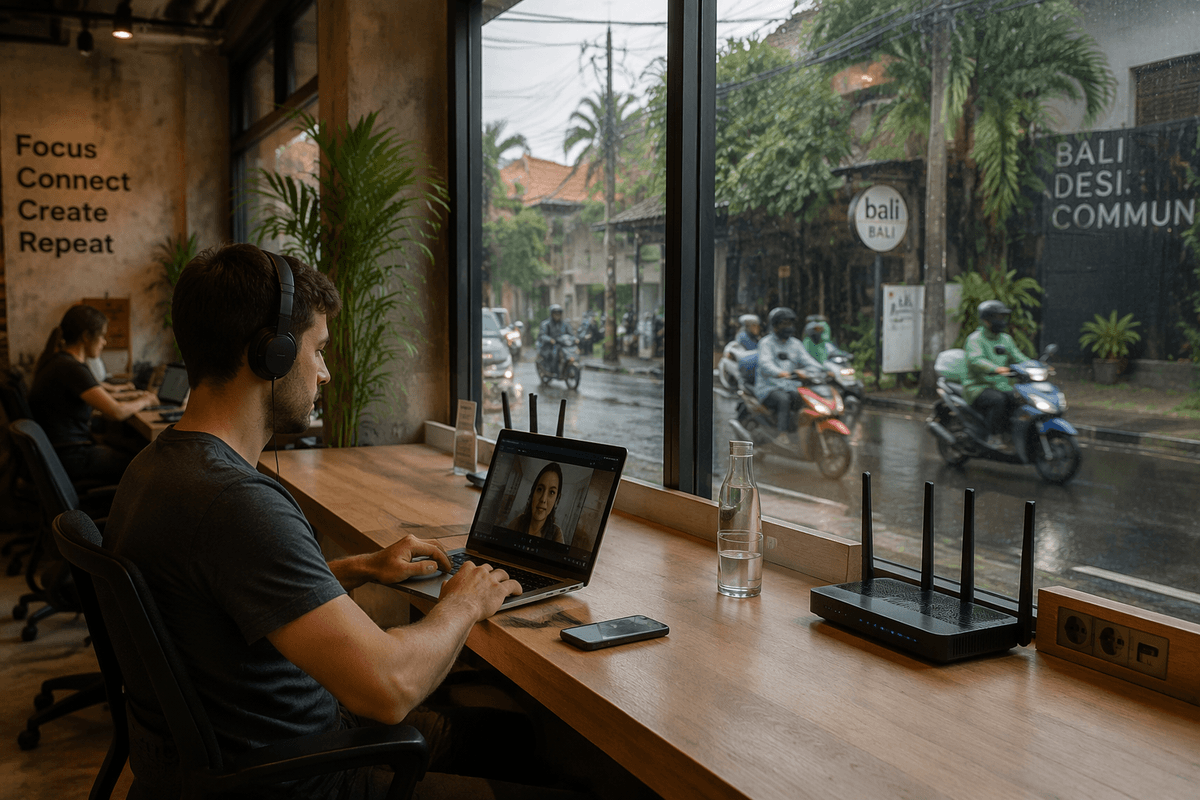
At 6:47 p.m. I tried to convince myself that “Ubud is only an hour from Canggu” was a workable weekly plan, then I watched my ride-hail estimate jump as the sky went gray. It wasn’t the time that spooked me as much as the uncertainty: would I arrive calm enough to take a call, or already fried? That’s the moment Bali stops being a dreamy pinboard and becomes a neighborhood decision.
If you’re doing video calls and need predictable AC + focus, Canggu is the highest-upside, highest-friction base: more coworking density (places like Dojo or BWork), more people who “get” workdays, and more noise/crowd flow when you show up after 10. Seminyak can feel like Canggu’s tidier cousin—better for being near restaurants and errands—but fewer purpose-built coworking clusters, so you’ll rely more on one good space and a couple backup cafés. Ubud rewards deep-work schedules (earlier starts, longer sits) with calmer mornings and fewer scooter battles, but it punishes you for late departures and spontaneous meetings across the island.
Sanur is the quiet compromise: less scene, more routine. It works if your priority is calls that start on time, walking to coffee without dodging traffic, and a coworking hub you can use repeatedly (Livit Hub is a common anchor) rather than “trying somewhere new” every day. My rule: pick the area where you’d still go to your workspace when it’s humid, raining, and you only slept six hours—then book your first week there, not your most aesthetic one.
Choose a space that matches your work
The day I bought a pass on the spot, the front desk said, “No phone booths until after lunch,” and slid a wristband across the counter like it was a beach club. I’d arrived at 9:38 a.m. assuming I could grab a quiet corner, but every seat near an outlet was already taken by someone in headphones. Paying wasn’t the problem; realizing I’d paid for the wrong kind of day was.
Match the space to your calendar, not your mood. If you have stacked video calls, prioritize predictable acoustics and dedicated call rooms over “community energy”—Dojo and BWork in Canggu can be great, but they’re also the places that fill up fastest once late-morning crowd flow starts. For deep work, quieter layouts and stricter vibes matter more than events; Ubud’s Hubud or an Outpost location tends to suit earlier starts, longer sits, and fewer interruptions. Sanur’s Livit Hub is less flashy, more routine—better if you want the same desk, the same AC, and fewer surprises.
The day passes are perfect for testing Wi‑Fi stability and noise at your call hours, but they get expensive if you’re working 5–6 days/week (expect roughly $10–$20/day, with weekly/monthly deals often landing cheaper per day). If you don’t ride a scooter, be stricter: pick a space you’d walk to in a sudden downpour, then use cafés as backups—not the other way around.
Fast ways to find day passes
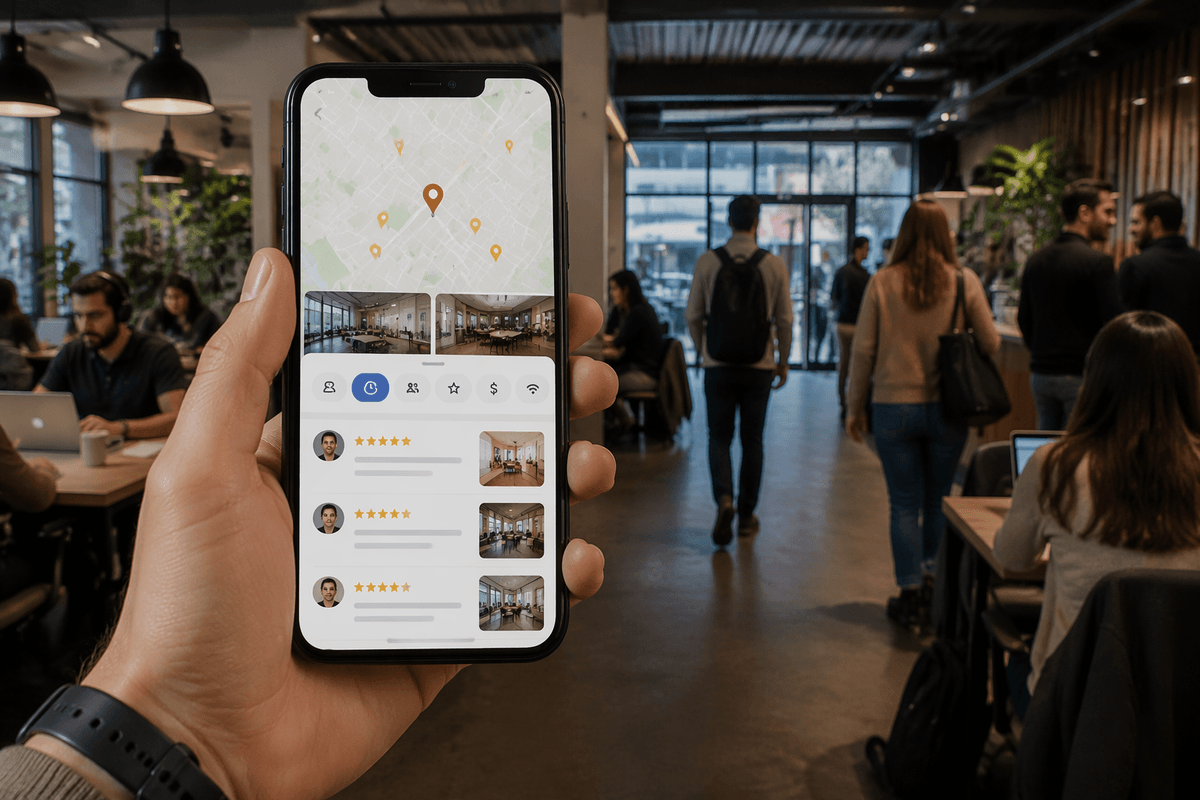
At 7:29 a.m. I was on a villa porch in Berawa, coffee sweating onto the table, refreshing WhatsApp while my calendar loaded. I didn’t have time for a “tour”—I needed a desk, AC, and Wi‑Fi that wouldn’t collapse at 10:30 when everyone else arrived. The pass itself was easy; finding a place that still had seats and a call plan wasn’t.
The fastest filter is boring: search “coworking near me,” then immediately jump to the most recent reviews and photos, not the hero shots. If you see three complaints about noise in the last month, assume your 11 a.m. call will feel like a café; if you see repeated notes about “full by 9:30,” treat it like a timing constraint, not a suggestion. This works best in Canggu/Seminyak where options are dense; in Sanur/Ubud you’ll have fewer backups, so confirm hours and whether day passes actually include booths.
For same-day passes, I’ve had the most luck using three channels in parallel: the space’s Instagram link-in-bio (often the real booking page), a quick DM asking “Do you have desks and a call booth available today from X–Y?”, and a short Google Maps call to the front desk. It’s redundant, but it saves scooter miles. The trade-off is you’ll feel slightly intense; the upside is you avoid arriving to a sold-out room, or paying for a “quiet zone” that’s quiet only before 9.
What I’d pick for your itinerary
On a Monday at 11:06 a.m., I tried to extend a week in Canggu and the host replied, “Booked from Thursday,” while my next two calls were still on Bali time. I had a day-pass QR code in my inbox, but no plan for where I’d be sleeping four nights later. That’s the moment I stop optimizing for the “best” coworking and start optimizing for the least relocating between calls.
If you’re here 2–4 weeks and booking week-to-week, I’d split it into two bases at most. For a call-heavy first week, I’d anchor in Sanur (Livit Hub) if you don’t ride a scooter, or Canggu (BWork/Dojo) if you do and can arrive early; both give you repeatable routines, but Canggu’s crowd curve punishes late starts. When you want a calmer deep-work stretch, move to Ubud (Hubud or Outpost) and treat “cross-island meetings” as a limitation, not an ambition.
Seminyak is my “buffer week” choice: decent errands, less chaotic than peak Canggu, but fewer backup coworking clusters if your first pick is noisy or full. My practical cue: pick the area where you can commit to the same workspace three days in a row—then use day passes to audition alternatives, not to rebuild your workday from scratch.